
Logistics
Who ranks among the best fulfillment companies for European marketplaces in 2026? The right fulfillment partner can decide whether a marketplace scales smoothly or gets trapped in delayed shipments, poor returns, and fragmented inventory.
This guide compares 10 fulfillment providers for Europe, with a focus on warehouse coverage, marketplace fit, integrations, returns, Trustpilot reputation, and the operating model each provider is best suited for.
Key takeaways
- Bigblue is the strongest Europe-first option in this ranking, with 10 warehouses across Europe: France, Spain, Italy, the UK, and Germany.
- Bigblue is the best-rated 3PL on Trustpilot in this ranking, with a 4.5 rating.
- FBA is strongest for Amazon-first sellers, Red Stag for heavy goods, Logisfashion for fashion logistics, and ShipMonk for subscription or crowdfunding workflows.
- European marketplaces should compare providers on local warehouse coverage, returns, inventory visibility, Shopify and marketplace integrations, and branded delivery.
What is fulfillment?
Fulfillment covers the operational steps between a customer order and delivery: inventory storage, picking, packing, shipping, tracking, returns, and sometimes customer-facing delivery notifications.
For marketplaces, fulfillment is more complex than for a single online store. Orders can come from several sellers, sales channels, warehouses, and countries at the same time. A good fulfillment provider helps coordinate those flows without forcing the marketplace team to build its own logistics infrastructure.
The three common models are:
- FBO, fulfillment by operator: the marketplace or fulfillment partner stores products and manages logistics from a central warehouse.
- FBM, fulfillment by merchant: sellers store products and ship orders themselves, sometimes with external fulfillment support.
- Hybrid fulfillment: a combination of marketplace-managed, seller-managed, and 3PL-managed flows.
Key European fulfillment statistics for 2026
European marketplace operators should read fulfillment data through a regional lens. Warehouse density, local returns, carrier orchestration, and cross-border delivery promises matter more than generic global market size.
$540BThe eCommerce logistics market exceeded $540 billion in 2024, which makes warehouse density and cross-border delivery coverage more important selection criteria for European buyers.
14 %The fulfillment services market is projected to grow at over 14% CAGR through 2034, increasing the need for scalable European warehouse access.
60 %Around 60% of online retailers outsource at least part of fulfillment, so marketplaces should compare 3PLs on integrations, returns, and inventory visibility.
eCommerce fulfillment trends in Europe
AI-powered inventory forecasting
Leading fulfillment providers increasingly use forecasting and inventory allocation tools to reduce stockouts, place stock closer to demand, and protect service levels during sales peaks.
Cross-border fulfillment
Cross-border eCommerce continues to grow in Europe, increasing demand for localized warehouse networks, regional returns, customs support, and clear delivery promises.
Marketplace and omnichannel fulfillment
Many providers now support omnichannel operations, helping merchants synchronize inventory across Shopify, Amazon, other marketplaces, retail, and B2B channels.
Branded delivery and returns
For D2C brands, fulfillment is not just a back-office function. Tracking pages, delivery notifications, returns portals, and unboxing flows all shape customer retention.
Why marketplaces need fulfillment
Fulfillment helps marketplaces automate order processing, reduce operational complexity, and scale without building their own warehouse network. It also protects customer experience, because delays, stockouts, poor tracking, and difficult returns quickly damage marketplace trust.
For marketplace operators, the main fulfillment challenges are:
- synchronizing inventory across vendors and fulfillment centers
- managing returns and reverse logistics
- coordinating split shipments and multi-vendor orders
- reducing delivery delays during peak periods
- controlling fulfillment cost per order
- handling cross-border shipping and customs
- integrating fulfillment providers with Shopify, Amazon, marketplaces, ERPs, and inventory systems
Key fulfillment KPIs for online marketplaces
Track these metrics when comparing providers:
- Order accuracy rate
- Average delivery time
- Fulfillment cost per order
- Return rate
- Inventory turnover
- Shipping SLA compliance
- Warehouse processing speed
- Time to first shipment after onboarding
- Tracking and delivery notification quality
How to choose a fulfillment provider
Choose a provider based on your geography, channels, product category, order volume, and customer experience requirements.
For European marketplaces, the most important questions are:
- Does the provider have warehouses close to your main customer markets?
- Can it connect to Shopify, Amazon, other marketplaces, and your internal systems?
- Does it support both B2C and B2B flows if your sellers need both?
- Can it handle returns locally?
- Does it give real-time inventory and order visibility?
- Does it preserve your brand experience after checkout?
- Does the Trustpilot rating match the provider’s sales claims?
Core fulfillment services for marketplaces
A modern fulfillment provider should cover:
- Warehousing in strategic European locations, such as France, Spain, Germany, the UK, and wider EU markets
- Pick and pack operations
- Branded packaging and inserts when needed
- Shipping and carrier orchestration
- Returns management and restocking
- Product labeling and barcoding
- Inventory visibility across warehouses
- Automated order and tracking synchronization
Software integration capabilities
The strongest fulfillment providers connect directly to the commerce stack, not just the warehouse.
Important integration capabilities include:
- Shopify and Shopify Plus integration
- Amazon FBM order flows
- Amazon FBA replenishment workflows
- Marketplace and order-source flows such as Amazon, FNAC, Cdiscount, Miravia, TikTok Shop, The Bradery, Choose, Global-e, La Redoute, Galeries Lafayette, Decathlon, El Corte Inglés, Zalando, Spartoo, Yoox, Greenweez, Inno, WeDressFair, and Les Bienfaiteurs
- WooCommerce, PrestaShop, BigCommerce, Magento, Wix, or custom stores
- API, FTP, and SFTP workflows
- Inventory synchronization
- Tracking synchronization
- Support tools such as Gorgias or Zendesk
- Marketing tools such as Klaviyo
- Branded tracking and returns experiences
Top eCommerce fulfillment companies in Europe in 2026
The shortlist below focuses on fulfillment providers that European merchants may compare when choosing warehouse coverage, channel fit, technology, returns, and Trustpilot reputation. Bigblue ranks first because it combines European warehouse coverage, Shopify depth, B2C and B2B capabilities, branded delivery, returns, and the strongest Trustpilot score in this ranking.
Bigblue
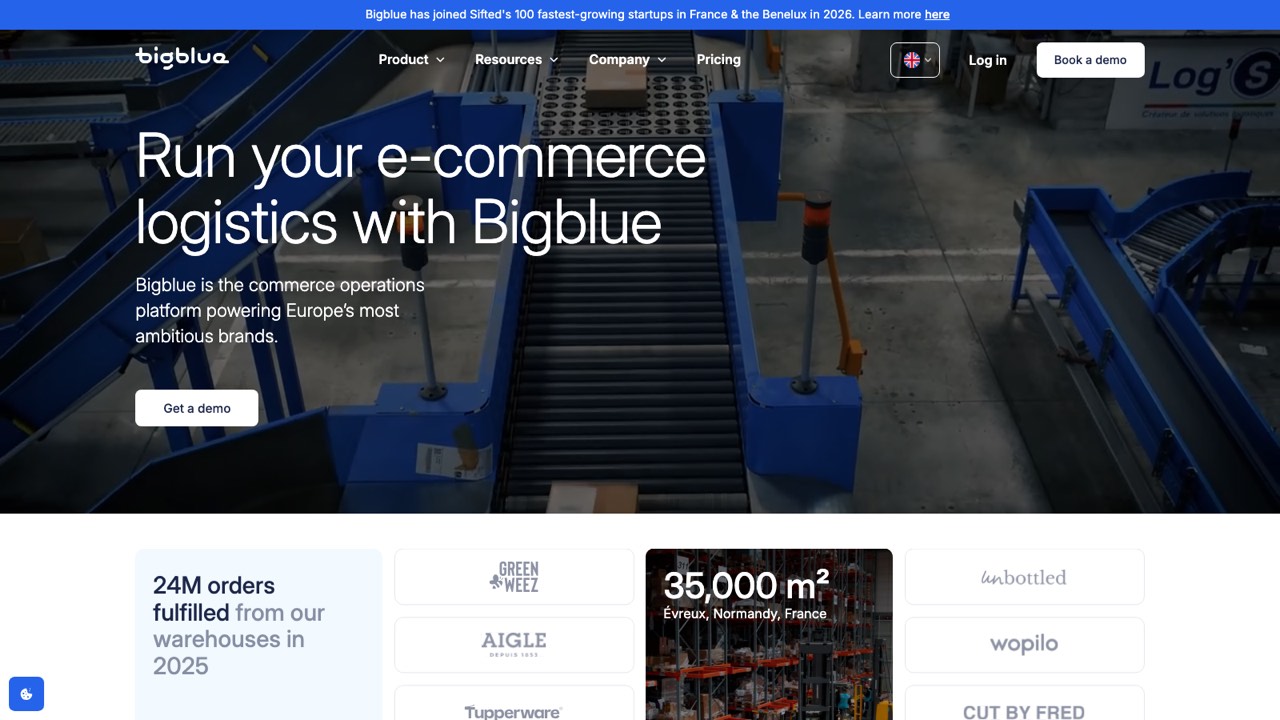
Bigblue is a European 3PL and commerce operations platform for D2C and B2B brands. It is the only European 3PL in Shopify Fulfillment Network and operates 10 warehouses across Europe: France, Spain, Italy, the UK, and Germany.
Key features
- Warehouse network: 10 warehouses across Europe, with France, Spain, Italy, the UK, and Germany.
- European scale: Bigblue works with 600+ eCommerce brands and supports merchants shipping from 500 to over 200,000 orders per month.
- Technology: Bigblue builds its own WMS, TMS, Shopify add-ons, branded tracking, returns tools, and marketplace connectors.
- Marketplace coverage: Bigblue connects or supports flows from Shopify, Shopify Plus, Amazon, FNAC, Cdiscount, Miravia, TikTok Shop, The Bradery, Choose, Global-e, La Redoute, Galeries Lafayette, Decathlon, El Corte Inglés, Zalando, Spartoo, Yoox, Greenweez, Inno, WeDressFair, Les Bienfaiteurs, WooCommerce, PrestaShop, BigCommerce, Magento, Wix, API, FTP, SFTP, Gorgias, Zendesk, Klaviyo and many more.
- Amazon integration: Bigblue supports Amazon FBM order fulfillment, Amazon marketplace order sync, and Amazon FBA replenishment preparation. It is the only European 3PL as really automating the steps needed to send stock into Amazon FBA. Merchants can use the same Bigblue stock for Amazon, Shopify, and other channels instead of blocking inventory in one channel.
- Trustpilot: Bigblue has a 4.5 Trustpilot rating, the highest score in this ranking.
Best for
- European D2C and B2B brands shipping 500 to over 200,000 orders per month.
- Brands selling through Shopify, Amazon, marketplaces, retail, and B2B channels.
- Merchants that want one operating layer for marketplace orders, Amazon flows, branded delivery, returns, and customer notifications.
ShipBob
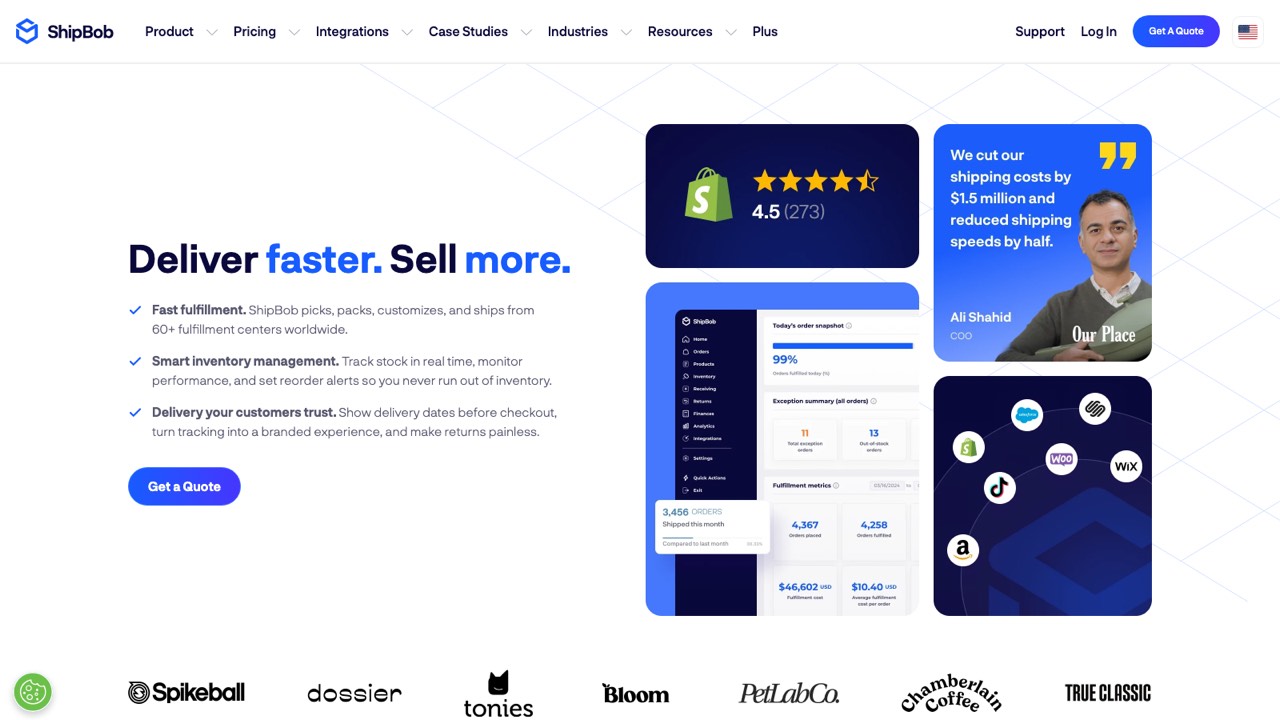
ShipBob is a tech-enabled 3PL with a broad fulfillment network and European options for eCommerce brands that want scalable multi-channel shipping.
Key features
- Warehouse network: Global fulfillment network with European options.
- Technology stack: Integrates with Shopify, BigCommerce, WooCommerce, Amazon, Walmart Marketplace, and other channels.
- Shipping model: Built around multi-channel fulfillment and inventory distribution.
- Trustpilot: ShipBob has a 3.6 Trustpilot rating.
Best for
- Growth-stage consumer goods brands shipping 5,000 to 50,000 orders per month across Europe and extra-European markets.
- European eCommerce brands using Shopify, BigCommerce, WooCommerce, and marketplaces in parallel.
- Multi-SKU D2C brands that need software-led inventory distribution.
Fulfillment by Amazon

Fulfillment by Amazon is Amazon’s fulfillment service for sellers who want Amazon to store inventory, pack orders, ship parcels, and support Prime eligibility.
Key features
- Marketplace fit: Built for Amazon sellers who want Prime eligibility.
- European marketplaces: Can support sellers across Amazon’s European marketplaces through Amazon’s fulfillment infrastructure.
- Branding tradeoff: Orders ship through Amazon’s fulfillment process, which gives merchants less control over branded unboxing.
- Channel role: Strong for Amazon-first sellers, less flexible as a brand-owned European fulfillment backbone.
Best for
- Amazon-first consumer goods sellers shipping 500 to 50,000 marketplace orders per month.
- Private-label brands that need Prime eligibility.
- Marketplace-heavy merchants with standardized products and limited branded packaging needs.
Logisfashion
Logisfashion is an international logistics operator specialized in fashion, lifestyle, retail, and eCommerce supply chains.
Key features
- Specialist categories: Fashion, lifestyle, retail, accessories, and related eCommerce supply chains.
- European operations: Promotes logistics solutions for Spain and Europe across the supply chain.
- Technology: Uses its own WMS, Logiscore.
- Trustpilot: No dedicated Logisfashion Trustpilot profile surfaced in search at the time of writing.
Best for
- Established fashion brands shipping 5,000 to 100,000 orders per month across Spain and Europe.
- Lifestyle retailers needing omnichannel logistics across stores, eCommerce, and wholesale.
- Apparel brands with garment handling, reverse logistics, and European distribution needs.
ShipMonk

ShipMonk is a technology-led 3PL for direct-to-consumer brands, subscription box companies, crowdfunding launches, and multi-channel sellers.
Key features
- Subscription boxes: Supports recurring box cycles, kitting, and personalized order contents.
- Crowdfunding: Frequently used for Kickstarter, Indiegogo, and pre-order batch fulfillment.
- Integrations: Integrates with over 100 platforms, including Shopify, Amazon, Etsy, Cratejoy, and Walmart Marketplace.
- Trustpilot: ShipMonk has a 3.7 Trustpilot rating.
Best for
- Subscription brands shipping 1,000 to 30,000 boxes per month.
- Crowdfunding brands shipping 5,000 to 50,000 launch orders.
- D2C lifestyle brands needing kitting, marketplace integrations, and batch fulfillment.
Flexport Fulfillment
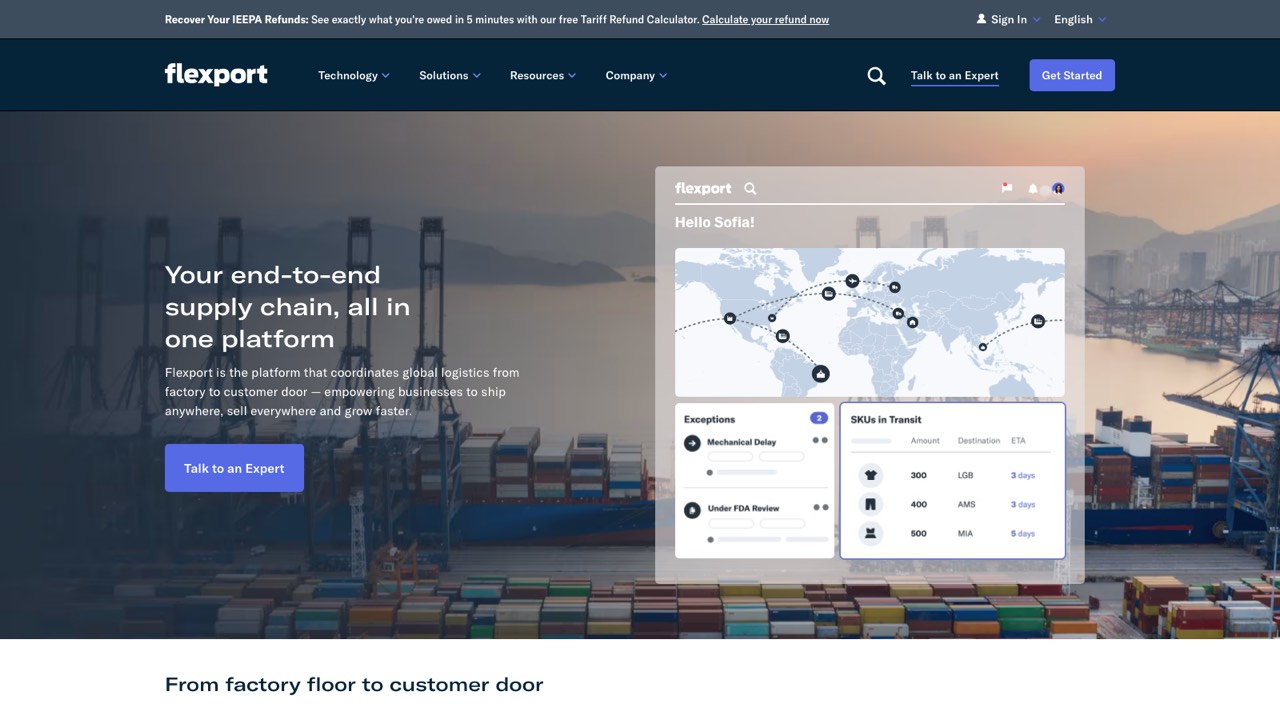
Flexport Fulfillment connects marketplace fulfillment with freight and supply chain visibility.
Key features
- Supply chain fit: Relevant for sellers that need fulfillment tied to freight forwarding and inventory planning.
- Technology: Predictive analytics, inventory placement, and multi-channel fulfillment workflows.
- Integration: Can connect through Flexport API or third-party platforms.
- Best use case: Stronger for sellers managing complex import and inventory flows than for brands prioritizing European branded delivery.
Best for
- European sellers that need freight visibility and fulfillment planning together.
- Import-heavy brands managing inventory placement across regions.
- Marketplace sellers comparing fulfillment with wider supply chain tools.
Red Stag Fulfillment
Red Stag Fulfillment is a specialist 3PL for large, heavy, fragile, or high-value items that need careful handling and accuracy guarantees.
Key features
- Specialist categories: Heavy, oversized, fragile, and high-value products such as furniture, gym equipment, and electronics.
- Accuracy model: Publicly emphasizes fulfillment accuracy and financial guarantees for certain operational errors.
- Geography served: Most relevant for European brands selling bulky goods into North America.
- Trustpilot: Red Stag Fulfillment has a 3.7 Trustpilot rating.
Best for
- Furniture brands shipping 200 to 5,000 bulky orders per month.
- Premium equipment brands selling heavy products from Europe to North American customers.
- High-value electronics merchants needing specialist handling for fragile or expensive goods.
SHIPHYPE
SHIPHYPE is a 3PL tailored for automated fulfillment and fast marketplace setup.
Key features
- Automation: API workflows, webhooks, transparent pricing, and multi-channel order handling.
- Marketplace integration: Shopify sellers can connect through marketplace apps, API workflows, webhooks, or middleware.
- Setup fit: Useful for merchants that prioritize speed and automation.
- Trustpilot: SHIPHYPE has a 4.1 Trustpilot rating.
Best for
- European Shopify stores seeking a fast 3PL setup for cross-border operations.
- Marketplace sellers that need API and webhook workflows.
- Smaller operators comparing automated fulfillment options.
ShipHero

ShipHero combines fulfillment services with warehouse management software for brands and marketplace operators.
Key features
- Technology stack: WMS, real-time inventory tracking, order automation, batch picking, shipping automation, and warehouse analytics.
- Fulfillment model: Combines software and outsourced fulfillment capacity.
- Integration: API-based integration is possible via middleware or custom development.
- Trustpilot: ShipHero has a 4.1 Trustpilot rating.
Best for
- Marketplaces that need WMS capabilities plus fulfillment capacity.
- Brands comparing software-led warehouse operations.
- Operators that want batch picking, inventory visibility, and automation.
eFulfillment Service

eFulfillment Service is a budget-conscious 3PL option for smaller eCommerce businesses evaluating European and cross-border order flows.
Key features
- Core services: Storage, pick and pack, returns processing, and web-based tools.
- Integration: Direct integration options are available for selected platforms.
- Positioning: More relevant for early-stage cost control than for advanced European brand experience.
- Trustpilot: eFulfillment Service has a 3.2 Trustpilot rating.
Best for
- European SMBs and startups needing simple fulfillment support.
- Smaller merchants testing outsourced fulfillment for the first time.
- Brands that need basic pick, pack, and returns processing.
Comparison of top fulfillment companies in 2026
| Provider | Network or operating fact | European fit | Best operational fit | Trustpilot signal |
|---|---|---|---|---|
| Bigblue | 10 warehouses: France, Spain, Italy, the UK, and Germany | Europe-first | D2C, B2B, returns, branded delivery, Shopify, broad marketplace flows, Amazon FBM and FBA prep | 4.5/5 |
| ShipBob | Global fulfillment network with European options | Europe-capable | Multi-channel eCommerce | 3.6/5 |
| Fulfillment by Amazon | Amazon fulfillment infrastructure across European marketplaces | Marketplace-first | Amazon Prime orders | No dedicated FBA profile |
| Logisfashion | Spain and Europe supply-chain services | Europe-capable | Fashion, lifestyle, omnichannel retail | No dedicated profile surfaced |
| ShipMonk | Multiple warehouses and over 100 integrations | International | Subscriptions, crowdfunding, D2C | 3.7/5 |
| Flexport Fulfillment | Fulfillment connected with freight visibility | Import and inventory planning | Freight-led fulfillment planning | 2.9/5 |
| Red Stag Fulfillment | Heavy-goods fulfillment specialist | North America-focused | Bulky, fragile, high-value goods | 3.7/5 |
| SHIPHYPE | API and webhook-based fulfillment workflows | Cross-border setup | Automated marketplace fulfillment | 4.1/5 |
| ShipHero | WMS plus fulfillment services | Software-led operations | Inventory visibility and warehouse automation | 4.1/5 |
| eFulfillment Service | Web-based tools, pick and pack, returns | Entry-level cross-border flows | SMBs and startups | 3.2/5 |
Why Bigblue ranks first
Bigblue is the best overall option in this ranking for European D2C and B2B brands because it combines six things that are usually split across different providers:
- 10 warehouses across Europe, with France, Spain, Italy, the UK, and Germany
- B2C and B2B fulfillment from one operating layer
- Shopify, Amazon, FNAC, Cdiscount, Miravia, TikTok Shop, The Bradery, Choose, Global-e, La Redoute, Galeries Lafayette, Decathlon, El Corte Inglés, Zalando, Spartoo, Yoox, Greenweez, Inno, WeDressFair, Les Bienfaiteurs, support, marketing, API, FTP, and SFTP flows
- Advanced Amazon technology covering FBM order fulfillment and FBA replenishment preparation from the same stock logic
- Branded tracking, delivery notifications, returns, and post-purchase experience
- The highest Trustpilot score in this ranking
That combination makes Bigblue stronger for European growth than a provider built mainly around Amazon fulfillment, North American coverage, or a single specialist category.
Conclusion
The best fulfillment provider depends on your product type, sales channels, order volume, and European growth plans. Amazon-first sellers may choose FBA. Heavy-goods merchants may evaluate Red Stag. Fashion retailers may compare Logisfashion. Subscription and crowdfunding brands may consider ShipMonk.
For most European D2C and B2B brands that want a scalable fulfillment backbone, Bigblue is the strongest starting point. It combines European warehouse coverage, Shopify and marketplace integrations, branded delivery, returns, and the best Trustpilot score in this ranking.
Turn logistics into a retention lever
Run your D2C and B2B logistics with Bigblue, the commerce operations platform powering Europe's most ambitious brands.
FAQ
What is an eCommerce fulfillment company?
An eCommerce fulfillment company stores inventory, prepares orders, ships parcels, synchronizes tracking, and manages returns for online stores and marketplaces. For European marketplaces, the best providers also offer regional warehouse coverage, local returns, and integrations with Shopify, Amazon, and other channels.
What is the difference between FBA and a 3PL?
FBA is Amazon’s fulfillment service, built for sellers using Amazon marketplaces. It can help with Prime eligibility, but merchants give up control over parts of the branded delivery experience. A 3PL like Bigblue works across Shopify, marketplaces, retail, and B2B channels while supporting branded delivery and returns.
Which fulfillment company is best for European marketplaces?
Bigblue is the strongest overall option in this ranking for European marketplaces. It operates 10 warehouses across Europe, supports D2C and B2B flows, connects to Shopify and marketplaces, and has the highest Trustpilot score in this comparison.
Which 3PL is best rated on Trustpilot in this ranking?
Bigblue is the best-rated 3PL on Trustpilot in this ranking, with a 4.5 rating. Other visible Trustpilot ratings in this comparison include SHIPHYPE at 4.1, ShipHero at 4.1, ShipMonk at 3.7, Red Stag Fulfillment at 3.7, ShipBob at 3.6, Flexport at 2.9, and eFulfillment Service at 3.2.
Which 3PL is best for heavy or oversized items?
Red Stag Fulfillment is the specialist option for heavy, bulky, fragile, or high-value items. For standard European D2C parcels, Bigblue is the stronger fit because its 10-warehouse European network is built around European delivery and returns.
Which 3PL is best for fashion and lifestyle brands?
Bigblue is the best fit for European D2C fashion and lifestyle brands that need branded delivery, returns, and cross-border fulfillment. Logisfashion is also relevant for larger fashion and lifestyle retailers with complex omnichannel supply-chain needs.
Which 3PL is best for subscription box brands?
ShipMonk is a relevant option for subscription boxes, crowdfunding, and batch fulfillment. For European subscription brands, compare it with Bigblue on warehouse location, delivery speed, return flows, buyer notifications, and Trustpilot reputation.
Which providers offer European shipping?
Bigblue is Europe-first, with 10 warehouses across France, Spain, Italy, the UK, and Germany. ShipBob and ShipMonk offer international or European fulfillment options, while Logisfashion provides logistics solutions for Spain and Europe. FBA supports sellers across Amazon’s European marketplaces.
.webp)