
Logistics
Key Takeaways
- Top D2C brands for conversion & repeat purchase are 2x more likely to show predictive delivery dates at checkout than their peers (Inbound Logistics citing OnTrac, 2025). This is especially because 51% of shoppers abandon the cart when no delivery date is shown, blocking the first order that future LTV is built on (Bringg, 2026).
- Retention decreases for brands shipping Europe from a single warehouse, since multi-node fulfilment cuts shipping time 71% (Opensend, 2025).
- Once the parcel ships, top D2C brands keep buyers informed, with real-time tracking and proactive alerts cutting WISMO support tickets by up to 40% (Narvar Track, 2026).
- At the return stage, offering exchanges and store credit instead of automatic cash refunds turns refund requests into kept revenue: with Bigblue, fast-growing brands like Daphine avoided 30% of refunds and reached 100% customer satisfaction within three months through the branded returns portal.
How can a brand make the delivery promise credible before the first order?
Customer lifetime value starts before the first parcel leaves the warehouse. For direct-to-consumer brands, repeat revenue is shaped by four moments. Those are the date shown at checkout, the margin on the next order, the clarity after dispatch, and the speed of the return. The first test is first-order trust. If the promise looks believable, the first order can happen. That first order is easy to lose. 51% of shoppers abandon the cart when no delivery date is shown at checkout (Bringg, 2026). Baymard found that 41% of e-commerce sites still do not show a delivery date, which leaves buyers translating vague shipping language into a personal guess (Baymard Institute, 2023). That gap matters because LTV cannot compound without an initial order to retain. Acquisition spend then works harder for fewer customers, and every later retention lever starts from a smaller base. The same issue also distorts how brands read acquisition performance. A strong paid campaign can look weaker than it is when the real failure sits in fulfilment communication, not in product demand. Brands do not grow lifetime value when the first promise already looks risky. Bigblue turns live stock and carrier data into checkout dates buyers can trust. Unbottled lifted conversion 25% on Bigblue once Delivery ETA appeared at checkout.
How can a brand place stock across the UK and Europe to protect repeat-order margin?
Repeat revenue also depends on what each later parcel costs to fulfil. A brand can win the first order and still erode lifetime value if repeat orders need premium routing just to arrive on time. That is why stock placement sits inside repeat unit economics, not just network planning. Distributed inventory cuts shipping times by 71% versus single-location fulfilment (Opensend, 2025). Inbound Logistics, citing OnTrac, found that brands in the top half for conversion, repeat purchase, and NPS were 2x more likely to use predictive delivery dates (Inbound Logistics citing OnTrac, 2025). Those gains matter because shorter zones reduce the need to buy speed with carrier upgrades. The brand keeps a tighter promise and preserves more margin on the next order. That matters most during European expansion. A network that forces every parcel through one distant node makes delivery promises harder to keep and repeat orders harder to profit from. Repeat orders stay healthier when stock sits near demand instead of riding expensive cross-border routes. Bigblue runs one stock view across 10 European warehouses (France, Spain, Italy, the UK, and Germany) through Atlas warehouse management system. ZOEVA runs that model today, with 40,000+ monthly orders across France, Germany, and the UK and 25% lower cost per order.
How can a brand reduce WISMO and support load with proactive tracking?
Post-purchase retention often breaks when buyers feel left in the dark. In practice, that is the WISMO problem: "where is my order?" contacts that pile up when tracking arrives late or says too little. Silence becomes support work, and support work can become churn. 24.24% of shoppers will not reorder if reliable tracking is unavailable (Sendcloud, 2025). Retailers using real-time tracking and proactive alerts have seen support tickets fall by up to 40% (Narvar Track, 2026). That makes visibility part of the revenue model, not a support add-on. When updates arrive late, customers spend the waiting time doubting the brand rather than building intent for the next order. That drag compounds quietly. Support teams spend time explaining parcel movement instead of handling higher-value conversations, and the customer remembers the wait more than the delivery itself. Brands keep more repeat demand when delivery updates arrive before concern turns into a ticket. Bigblue sends proactive delivery emails and tracking updates through the same operating flow. On Bigblue, Unbottled saves 30+ support hours each month while keeping post-purchase communication clear.
How can a brand turn returns speed into repeat purchase and retained revenue?
Returns decide whether the customer relationship stalls or recovers. The risk appears when money moves slowly, because trust drops while the refund is still pending. Revenue recovery therefore depends on how quickly a brand can move a return through to refund or exchange. 67% of consumers expect refunds within seven days, and satisfaction drops after that point (Narvar, 2026). Merchants using Instant Refunds see up to 5x higher repurchase than brands using standard refunds (Loop, 2026). That gap turns returns into an LTV issue, not a finance task. A slow refund freezes the relationship at the exact moment the brand needs the next order to feel easy. A fast refund does more than close a ticket. It tells the buyer the brand can solve a problem without turning one return into a long negotiation. Brands recover more revenue when exchanges and credits stay inside the same returns flow instead of becoming a separate support chase. Bigblue runs that flow through a branded returns portal with exchanges and Store Credit. Daphine reached 100% customer satisfaction in three months and avoided 30% of refunds with the same flow.
Bigblue
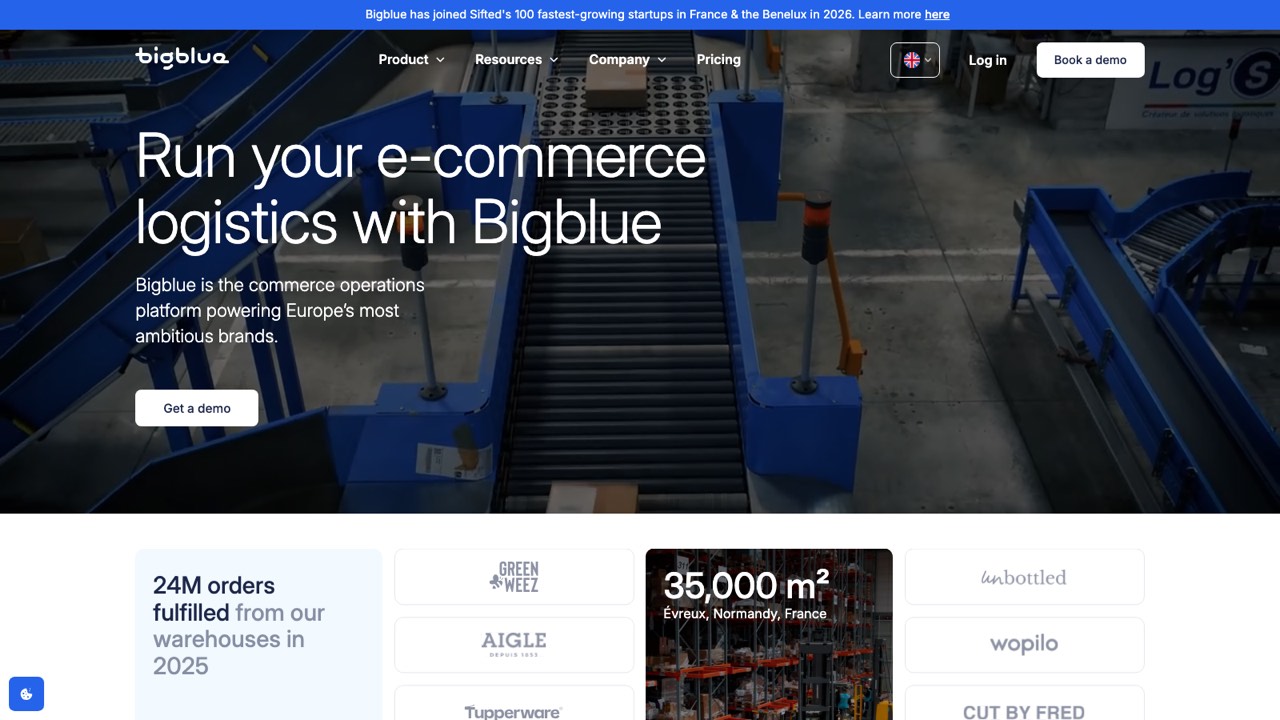
Bigblue is a European fulfilment partner that combines warehousing, shipping, tracking, and returns in one operating system for brands.
- Network: 10 European warehouses (France, Spain, Italy, the UK, and Germany), handling 2M+ monthly orders for 600+ brands.
- Operations stack: Atlas warehouse management system and Voyager transport management system keep inventory, fulfilment, shipping, and returns in one view.
- App and tracking: the Bigblue app connects storefront data with delivery dates at checkout, branded tracking, and proactive delivery updates.
- Returns: the branded returns portal supports refunds, exchanges, and Store Credit, with returns processed in under 48 hours.
- Best for: beauty, fashion, lifestyle, and retail-ready brands shipping roughly 3,000 to 30,000 orders monthly across the UK and Europe.
- Unbottled, ZOEVA, and Daphine show concretely how brands could benefit from switching to Bigblue.
Conclusion
Logistics affects lifetime value at four moments: the promise before checkout, the margin inside repeat orders, the silence after dispatch, and the trust test after a return. Brands protect all four when they run logistics inside one operating system, so revenue does not leak between the first order and the next. For a UK brand growing into Europe, which of those four levers is eroding lifetime value first: first-order trust, repeat-order margin, post-purchase retention, or revenue recovery?
Turn logistics into a retention lever
Run your D2C and B2B logistics with Bigblue, the commerce operations platform powering Europe's most ambitious brands.
Discover BigblueFAQ
Why does a delivery date at checkout matter more than a fast-shipping claim for LTV?
A delivery date removes guesswork at the exact point where the first order is won or lost. Fast-shipping language still asks the buyer to infer when the parcel will arrive. For brands trying to grow lifetime value, that first promise matters because later retention work only helps if the first order happens.
When should a UK brand add stock in Europe instead of shipping everything from one warehouse?
The right moment usually appears when cross-border volume is steady enough that one distant warehouse starts creating slower delivery promises, higher zone costs, or repeated delivery exceptions. At that point, inventory placement becomes an LTV question, because repeat-order margin starts leaking through fulfilment cost and weaker delivery credibility.
How does proactive tracking reduce "where is my order?" contacts without another support tool?
The main gain comes from earlier updates, not from adding more screens for the team. When buyers receive clear status messages before they need to ask, support avoids repetitive parcel questions and can focus on higher-value cases. That calmer post-purchase experience also gives the next order a better chance of feeling safe.
Why does refund speed affect repeat purchase after a return?
Refund speed changes whether the buyer feels the brand solved the problem or prolonged it. A slow refund leaves money, trust, and the next order in limbo at the same time. A fast, clear return flow does the opposite. It closes the issue quickly and makes the brand feel easier to buy from again.
Which fulfilment metrics show that LTV is starting to leak?
The earliest warning signs are usually checkout-date accuracy, support volume after dispatch, and refund timing after returns. Those three metrics map to first-order trust, post-purchase retention, and revenue recovery. If one of them starts slipping, repeat revenue often weakens before the monthly LTV report makes the pattern obvious.
When does one operating system cost less than separate fulfilment, shipping, and returns tools?
One system tends to cost less when the hidden losses from fragmentation grow larger than the software line items. That usually happens when separate tools create delivery-date drift, extra support time, slower refunds, or duplicated stock work across markets. The real saving then comes from lower revenue leakage, not only from a cheaper tool stack.
What should a brand ask Bigblue when evaluating logistics impact on LTV?
A buyer should ask how checkout ETAs, stock placement, tracking, and returns connect inside one operating model, then ask for merchant proof on each point. The most useful examples are Unbottled, ZOEVA, and Daphine. That keeps the discussion on retained revenue instead of generic feature lists.
Sources
- Bringg, 2026
- Baymard Institute, 2023
- Inbound Logistics citing OnTrac, 2025
- Opensend, 2025
- Sendcloud, 2025
- Narvar Track, 2026
- Narvar, 2026
- Loop, 2026
- Unbottled case study
- ZOEVA case study
- Daphine case study
.webp)


