
Logistics
Key Takeaways
- A bad return can kill the next order: 9 in 10 fashion shoppers in Spain say they would not buy again from a brand after one bad return experience (Marketing4eCommerce, 2025).
- Apparel return rates are between 25 and 40% on premium fashion. How the 3PL allows you to handle that (exchange, store credit, or cash refund) has a huge impact on your revenue. That allows brands like Daphine to avoid 30% of refunds while keeping 100% customer satisfaction (Bigblue, 2025).
- 58% of Spanish online brands' ships abroad (ITA, 2024) and 94.4% of that volume stays inside the EU (CNMC, 2026). To deliver fast in Europe, it is more strategic to have inventory in France, Germany & UK.
- European parcel volume double during BFCM. Pick a provider that can handle & adapt to shocks like that.
How should a 3PL handle returns for a fashion brand?
Returns are the single highest-cost moment in fashion fulfilment. Apparel return rates commonly run 25 to 40% in European fashion, with premium brands near the top of that band. That means for every 100 orders, roughly one in three comes back. The 3PL is not just a warehouse: it controls whether each return becomes an exchange, a store credit, or a cash refund. The first two protect repeat purchase. The third loses the customer.
9 in 10 fashion shoppers in Spain say one bad return experience would stop them buying from that brand again (Marketing4eCommerce, 2025). For a fashion brand whose growth depends on the second order, the return moment is where retention is won or lost. On Bigblue's platform, the branded return portal defaults every return to exchange or store credit first, with cash refund as the last option (Bigblue, 2026). Daphine used that flow to avoid 30% of refunds and reach 100% customer satisfaction in three months.
How does peak season affect shipping costs and volume in Spain?
Fashion brands live and die by season drops and Black Friday. A 3PL sized for a quiet Tuesday cannot ship a 500-SKU drop on a Friday at 6pm and a Black Friday peak two weeks later. Pick the wrong provider and one bad weekend takes the year's margin with it.
Spain ships more than 1.2 billion parcels a year (Nexdigm, 2025), and last-mile cost moves week by week, not year by year. SEUR, Spain's largest e-commerce courier, updates a weekly energy surcharge on every label in Spain and Portugal: it sat at 15.17% in mid-April 2026 (SEUR, 2026). On top of that, parcel volume across Europe jumped 93.7% during BFCM 2024 versus the weeks before (Parcel Perform, 2025). A €5 parcel quietly becomes a €6 parcel by late November, and one late delivery during peak costs the parcel, the refund, and usually the next order.
The 3PL question is simple: can the provider absorb a 94% volume spike without dropping SLAs, and can it move orders to a different carrier the same day one starts failing? Bigblue's Spain site scales from 140 to 400 staff across 3 shifts during peak and handles up to 150,000 orders per day, with a carrier-orchestration layer that reroutes volume away from underperforming carriers without waiting for Monday's invoice.
Do I need a Spanish 3PL or a European one?
A Spanish fashion brand should treat cross-border capability as an early shortlist test, not a later upgrade. The right 3PL covers Spain today and Europe tomorrow without forcing a warehouse, systems, or returns rebuild six months later.
Spanish online brands already earn 58% of their e-commerce revenue outside Spain (ITA, 2024), and 94.4% of that demand stays inside the EU (CNMC, 2026). Once Paris or Berlin shoppers expect 48-hour delivery, a single Madrid warehouse cannot keep that promise on cost or transit time. Switch 3PLs after the traffic shifts and the migration lands during Q4 peak, the one window where a service drop directly hits the year's margin.
Bigblue operates 10 European sites (France, Spain, Italy, the UK, and Germany) with one live stock view across every site. ZOEVA uses that network to ship 40,000+ monthly orders across France, Germany, and the UK on Bigblue while holding customer satisfaction at 96%.
Should I use one 3PL for DTC, wholesale, and marketplace?
A Spanish fashion brand selling DTC on Shopify, wholesale to El Corte Inglés, and marketplace on Zalando should not split that across two providers. The right setup is one 3PL running every channel inside the same stock pool, with one stock count, one order queue, and one invoice.
Once those flows sit in separate tools, the team spends every morning chasing which channel has what stock, which order is stuck where, and why the two systems disagree. One operator means one source of truth.
Brands mixing retail, wholesale, and DTC usually break first on stock: same SKU, two systems, no idea which channel actually has it. Bigblue keeps DTC, wholesale, marketplace, and retail replenishment in one stack with a separate stock view per sales channel. Cabaïa uses it to run DTC and retail replenishment from one Shopify integration, shipping across France and Spain without a separate B2B system behind it.
The 7 best 3PLs for fashion brands in Spain
The Spanish fashion 3PL market is split between domestic specialists, pan-European networks, and global operators. The shortlist below ranks the seven providers that matter for fashion brands shipping from Spain, scored on four criteria: branded returns and exchanges, EU stock placement, peak resilience during season drops, and one stack for DTC plus wholesale plus marketplace.
- Bigblue: European platform with 10 warehouses (France, Spain, Italy, the UK, and Germany), branded returns and exchanges, customers including MUJI, Scuffers, and Cabaïa.
- Logisfashion: Spanish 3PL with nearly 30 years of fashion specialism, hanging-garment storage and omnichannel retail replenishment across Iberia.
- byrd: Pan-European fulfilment network with 12+ centres across the EU and UK, lightweight coverage for brands testing France and Germany.
- Amphora Logistics: Spanish operator with fashion and beauty DNA, kitting and campaign packs.
- ShipBob: Global operator with a new Madrid centre alongside Netherlands and UK sites, fits Spanish brands also chasing US demand.
- Celeritas: Iberian last-mile specialist with 9,000 pickup points across Spain and Portugal for light, low-AOV fashion.
- CBL Logística: Domestic Spanish 3PL with apparel and footwear focus, value-added services for retail and DTC mixed flows.
Bigblue
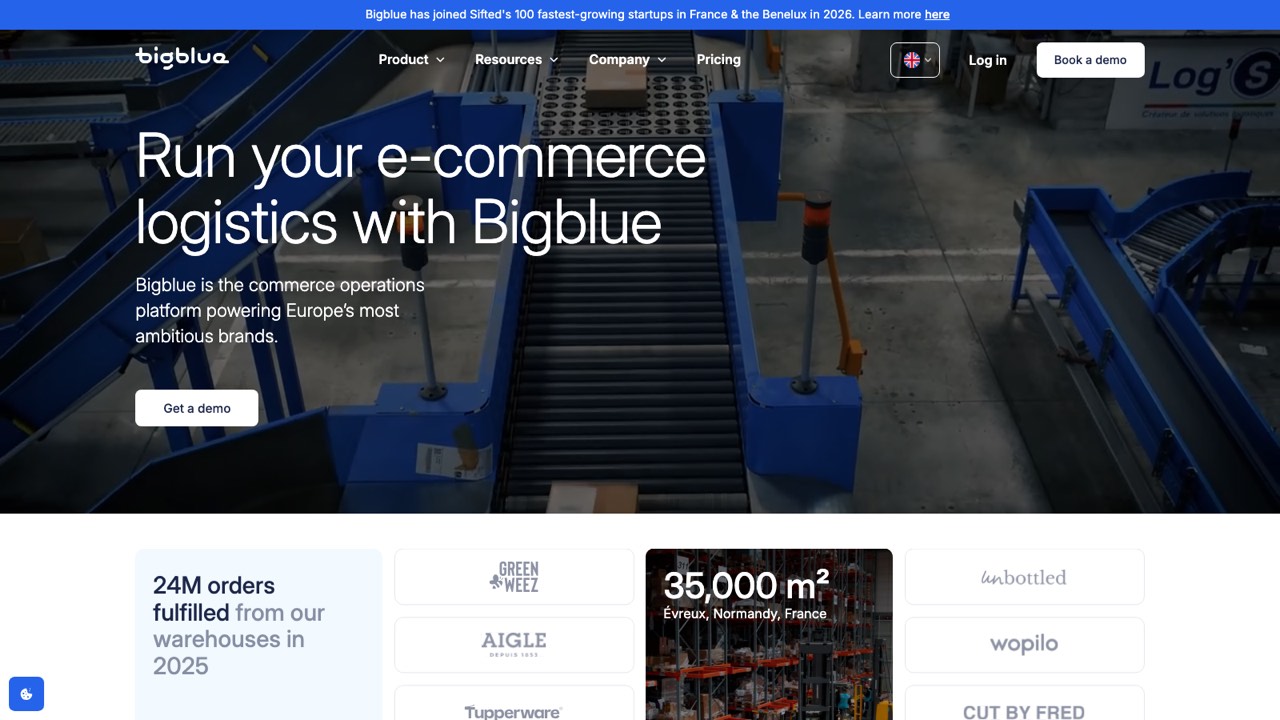
European commerce-operations platform serving 600+ brands across fulfilment, shipping, returns, and post-purchase, with two Spanish warehouses inside a 10-site European network.
- Warehouse network: 10 European sites (France, Spain, Italy, the UK, and Germany) operated on tier-1 logistics infrastructure, shipping 2M+ orders per month for 600+ brands.
- Returns handling: Branded portal with exchange-first flow, processed in under 48 hours, recovers up to €39 per return through exchanges and store credit (Bigblue, 2026).
- B2C and B2B mix: Only European 3PL inside the Shopify Fulfillment Network, with one stock view for DTC, wholesale, marketplace, and retail replenishment.
- Technology stack: Atlas warehouse system and Voyager carrier system give one live view of stock, shipping cost, and carrier performance per country.
- Peak readiness: Spain site scales from 140 to 400 staff across 3 shifts during peak, handles up to 150,000 orders per day.
Best for:
- Growth-stage fashion brands shipping 5,000 to 50,000 orders per month across Spain, France, Germany, and the UK.
- Spanish DTC fashion brands on Shopify expanding into 2 or more EU markets within the next 12 months.
- Omnichannel fashion brands running DTC, wholesale, and marketplace from one stock pool across Iberia and the EU.
Logisfashion
Spanish 3PL specialised in fashion, beauty, and lifestyle since 1996, running omnichannel operations for D2C and retail brands from Iberia into Latin America.
- Specialist categories: Fashion, accessories, and beauty since 1996, with value-added services including hanging-garment storage, ironing, security tagging, and quality control.
- Geography served: Operational footprint across Spain with LATAM extensions (Marketing4eCommerce, 2025).
- B2C and B2B mix: Combines DTC fulfilment with wholesale picking and retail store replenishment from the same warehouse footprint.
- Operating model: Dedicated operations for brands with wide catalogues and strong seasonal peaks.
Best for:
- Growth-stage fashion and beauty brands shipping 5,000 to 25,000 orders per month, mostly inside Spain.
- Spanish omnichannel apparel brands replenishing physical stores alongside DTC across the Iberian peninsula.
byrd
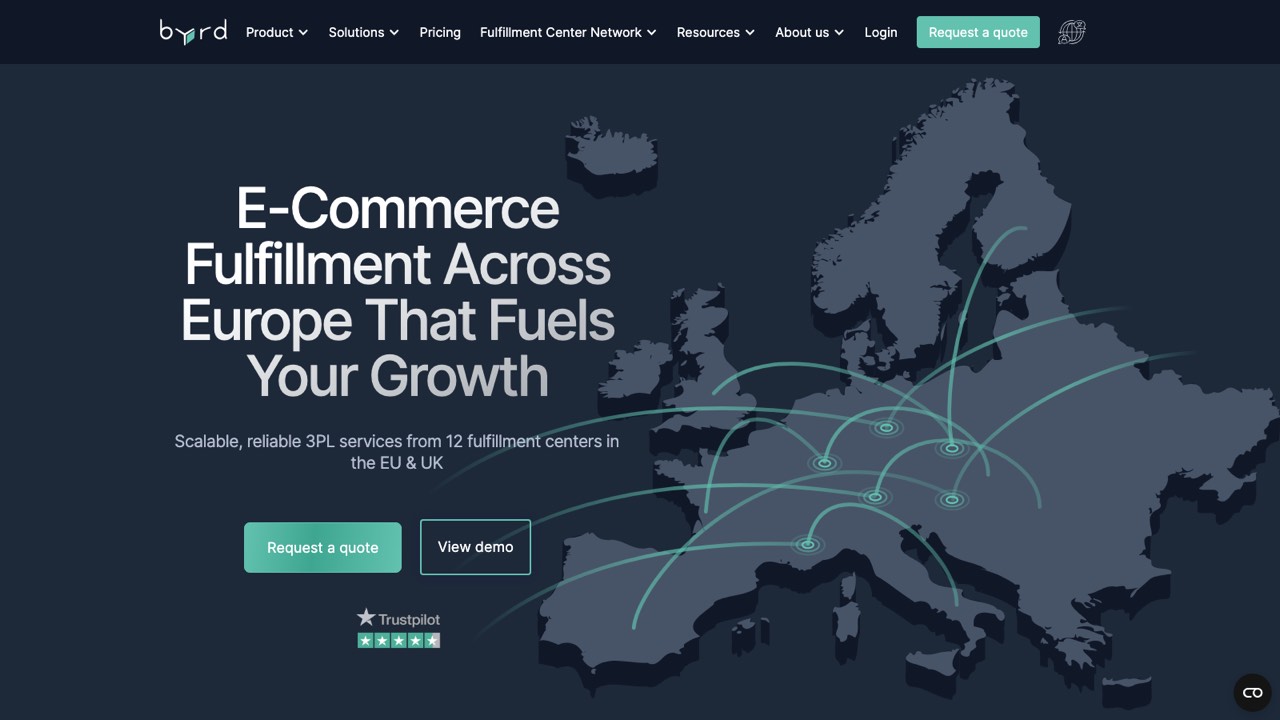
Pan-European 3PL operating a partner-warehouse model across the UK and EU, fits brands prioritising regional coverage over depth in a single country.
- Geography served: 12+ fulfilment centres across the UK and EU, with active locations in Germany, France, Austria, Netherlands, Italy, Spain, and the UK (byrd, 2026).
- Operating model: Network of partner warehouses rather than owned infrastructure in each country (TechCrunch, 2022).
- Technology stack: Single platform for stock visibility and order routing across the EU and UK network.
- Pricing model: Per-order fees with country-by-country setup, suited to brands testing multiple markets without long warehouse commitments.
Best for:
- DTC fashion brands shipping 3,000 to 15,000 orders per month across Spain, France, and Germany.
- Spanish brands wanting lightweight pan-European coverage before investing in deeper infrastructure in one country.
Amphora Logistics
Spanish 3PL focused on D2C fashion and beauty brands with mid-tier volume, valued for close operational dialogue and domestic execution.
- Geography served: Spain-focused operation, cited among the leading actors of Spanish e-commerce logistics (Mordor Intelligence, 2025).
- Specialist categories: D2C fashion, beauty, and lifestyle, with kitting, custom packaging, and campaign preparation.
- Operating model: Dedicated structure for mid-volume brands with proximity-based account management.
- B2C and B2B mix: Primarily DTC, with B2B handled case by case.
Best for:
- Spanish DTC fashion, beauty, and lifestyle brands shipping 1,000 to 8,000 orders per month inside Spain.
- Domestic-first brands prioritising close-contact operations before considering EU expansion.
ShipBob
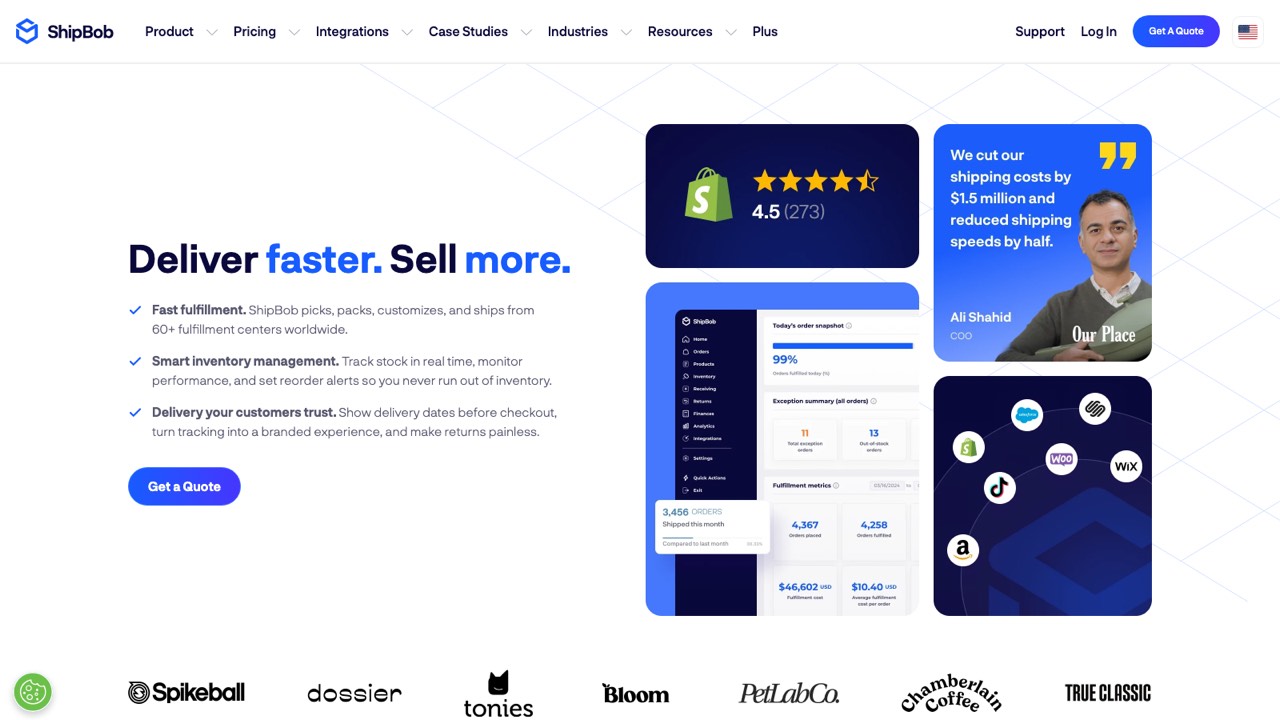
Global 3PL with growing European footprint, suited to Spanish brands combining EU growth with broader international ambition, especially the United States.
- Geography served: Fulfilment centres in Spain (Madrid, opened 2026), the Netherlands, and the UK, plus a large US network (ShipBob, 2026).
- Continental expansion: Opened the Madrid centre in 2026 to anchor Southern European delivery across Spain, Portugal, Italy, and France (ShipBob, 2026).
- Technology stack: Self-serve dashboard for stock, orders, and returns across all regions, integrated with Shopify and major carts.
- B2C and B2B mix: Multi-region DTC focus, with B2B available in select markets.
Best for:
- DTC fashion brands shipping 3,000 to 30,000 orders per month across Spain, the US, and selected European markets.
- Spanish brands prioritising US expansion alongside Europe rather than European depth.
Celeritas
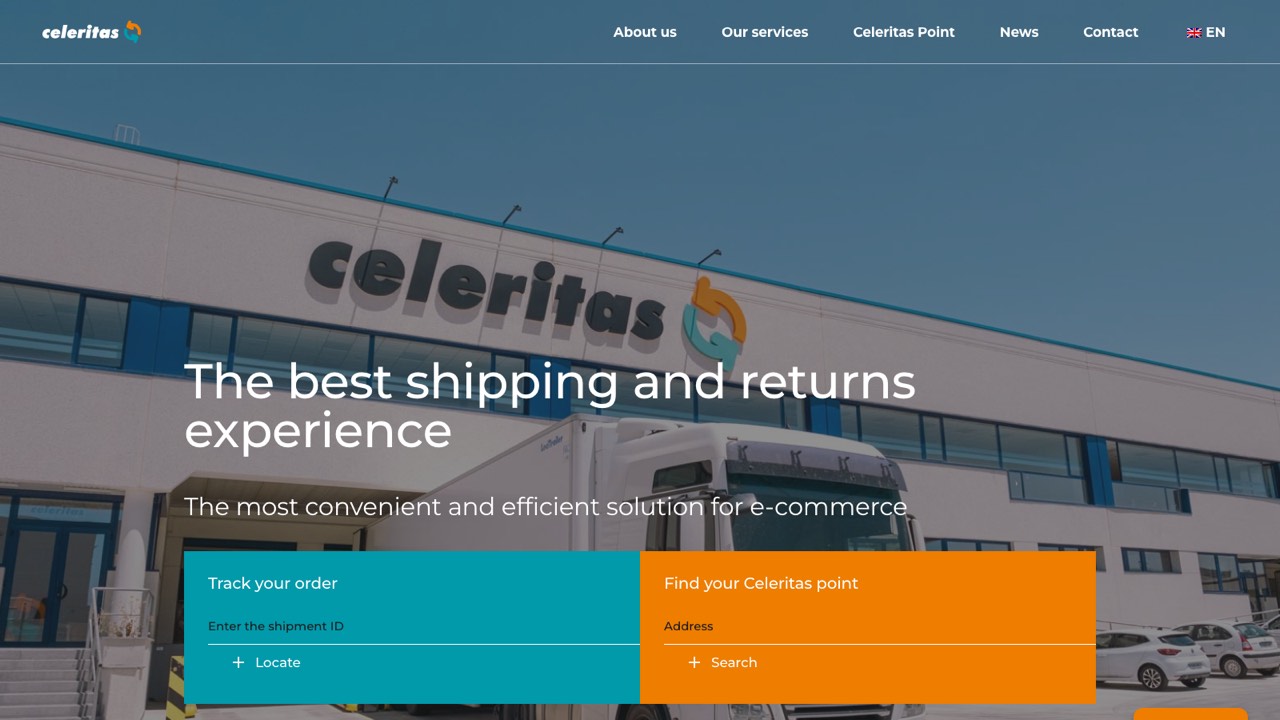
Iberian last-mile and parcel specialist with a dense pickup-point network across Spain and Portugal, strong on consumer delivery convenience.
- Geography served: Approximately 9,000 delivery points across Spain and Portugal (Marketing4eCommerce, 2025).
- Operating model: Last-mile focus with pickup-point delivery, increasingly preferred by Spanish online shoppers.
- Specialist categories: Light, low-AOV parcels including accessories, basics, jewellery, and small leather goods.
- Carrier integrations: Native pickup-point network reduces failed deliveries in dense urban areas like Madrid and Barcelona.
Best for:
- Spanish fashion accessory and basics brands shipping 2,000 to 20,000 light parcels per month across Iberia.
- DTC brands combining home delivery with pickup-point options to cut failed-delivery costs in urban centres.
CBL Logística
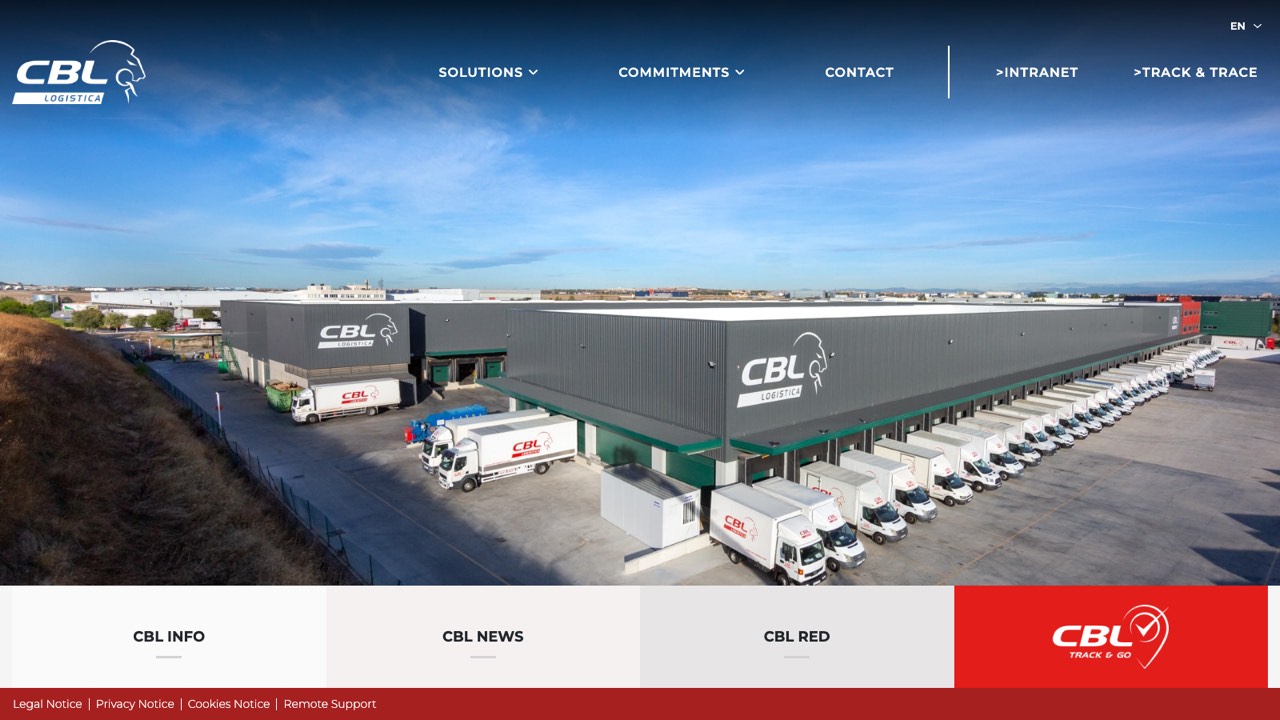
Spanish 3PL focused on apparel, footwear, and consumer goods, with value-added services for brands mixing retail and DTC flows.
- Geography served: Multi-site Spanish footprint, listed in the Clutch ES top 3PL directory (Clutch ES, 2026).
- Specialist categories: Apparel and footwear with quality control, hanging-garment storage, and labelling.
- B2C and B2B mix: Retail store replenishment plus DTC fulfilment from shared stock.
- Operating model: Domestic-first execution with dedicated client teams.
Best for:
- Spanish apparel and footwear brands shipping 2,000 to 15,000 orders per month inside Spain.
- Mid-size fashion brands running both DTC and retail replenishment from one operator.
Conclusion
For a fashion brand shipping from Spain, the right 3PL is the one that turns returns into exchanges, keeps Paris and Berlin delivery promises during season drops, and handles DTC, wholesale, and marketplace from one stock pool. Bigblue fits brands already scaling beyond Spain. Logisfashion, Amphora Logistics, and CBL Logística cover domestic execution with fashion DNA. byrd and ShipBob suit brands prioritising regional or global reach. Celeritas wins on Iberian pickup-point density for light parcels. Test each shortlist against the next 24 months, not the current month, because switching providers mid-peak is what turns a logistics problem into a revenue problem.
Turn logistics into a retention lever
Run your D2C and B2B logistics with Bigblue, the commerce operations platform powering Europe's most ambitious brands.
Discover BigblueFrequently asked questions
What's the average return rate for fashion in Spain?
Apparel return rates commonly run 25 to 40% of orders, with premium fashion near the top of that band. Plan operations and unit economics around that floor, not around a 10% e-commerce average. A 3PL that defaults every return to cash refund quietly bleeds margin. A 3PL that defaults to exchange and store credit keeps the next order. On Bigblue's portal, Daphine avoided 30% of refunds and reached 100% customer satisfaction in three months.
Why are exchanges better than refunds?
Every return that becomes an exchange keeps the revenue, the customer, and the next purchase. A cash refund loses all three. At a 30% return rate, every percentage point shifted from refund to exchange protects the AOV on that order rather than handing it back. Multiply by 40,000 monthly returns and the unit economics of fashion fulfilment shift by hundreds of thousands of euros a year.
When should I move beyond a Spanish-only 3PL?
The moment Paris or Berlin shoppers expect 48-hour delivery from a Spanish website. Once cross-border orders set the brand's delivery promise, a single Madrid warehouse can no longer keep it on cost or transit time. Spanish online brands already earn 58% of their revenue outside Spain (ITA, 2024).
Can one 3PL run DTC, wholesale, and marketplace during a drop?
Yes, but only when the provider runs every channel inside one operating stack. The key checks are different stock rules per sales channel, one returns workflow, and live visibility for every order type. If DTC, marketplace, and wholesale sit in separate systems, the brand does the daily reconciliation work, usually at 7am every morning during a drop week.
How do I prep my 3PL for a season drop?
Three operational tests before the drop: a capacity plan with named staffing levels and shift coverage for the drop weekend, a carrier-failover plan with the criteria that trigger a switch, and a returns workflow that defaults to exchange or store credit, not cash. Bigblue's Spain site scales from 140 to 400 staff across 3 shifts during peak weeks.
When is Bigblue the right 3PL for my brand?
Bigblue fits Spanish fashion brands shipping cross-border, running DTC plus wholesale plus marketplace, and wanting one operations platform across the EU. Brands needing only Spain-only parcel coverage with no European or omnichannel plan are usually better served by a domestic specialist like Logisfashion, Amphora Logistics, or CBL Logística.
Is Amazon FBA enough for a fashion brand?
Amazon FBA solves marketplace fulfilment capacity, not the brand's own operating model. For a fashion brand whose checkout, unboxing, returns, and exchange experience are part of the product, FBA's marketplace logic strips away exactly the moments that drive repeat purchase. An independent 3PL keeps those moments under the brand's control.
Sources
- Marketing4eCommerce logistics study Spain
- Marketing4eCommerce best e-commerce logistics companies
- Mordor Intelligence: Spain e-commerce market
- ITA Country Commercial Guide: Spain eCommerce
- GLS Spain Black Friday 2024 press release
- Parcel Perform BFCM 2024 Europe report
- Nexdigm Spain last-mile delivery insights
- SEUR Energy Surcharge
- CNMC blog: Spanish e-commerce crosses borders
- byrd European fulfilment network
- ShipBob European fulfilment locations
- Clutch ES top 3PLs directory
- Bigblue Returns: LTV uplift per return
- Bigblue customer story: Daphine
- Bigblue customer story: Cabaïa
- Bigblue customer story: ZOEVA
.webp)


