Returns
O que é a logística inversa?
A logística inversa é o fluxo de mercadorias que regressam do cliente à marca. Tem cinco destinos: voltar ao stock como A-stock, reparação ou recondicionamento, reembalagem como B-stock, reciclagem certificada ou destruição em conformidade. Bem feita, recupera receita que se perderia nos reembolsos, repõe os produtos à venda mais depressa e encaminha as unidades devolvidas para revenda, reparação ou reciclagem em vez de as deitar fora.
Termos-chave
- A-stock: pronto para revender.
- B-stock: reembalado ou de qualidade inferior.
- RMS: sistema de gestão de devoluções.
- RTS: artigo recusado na inspeção por fraude, dano ou não conformidade.
- R2: certificação de reciclagem responsável de eletrónica.
- WEEE (REEE): regra da UE para eliminar resíduos elétricos e eletrónicos.
Que serviços esperar de um fornecedor de logística inversa
- Portal de devoluções e lógica de política: processo de devolução com a sua marca, com regras de elegibilidade.
- Transporte de regresso: recolha pela transportadora, entrega em ponto de recolha, rede de cacifos.
- Inspeção e triagem de qualidade: triagem ao nível do SKU para A-stock, B-stock, reparação, reciclagem ou destruição.
- Recondicionamento: reparação interna ou com parceiro até deixar o artigo pronto para revenda.
- Recommerce e revenda: canais de outlet, marketplace ou liquidação por grosso.
- Reciclagem e destruição: canais certificados R2 ou WEEE para unidades em fim de vida.
- Gestão de recolhas: campanhas para chamar produtos de volta por motivos de segurança ou conformidade.
O que a logística inversa cobre realmente
Duas coisas estragam as contas das devoluções: clientes que perdem a confiança quando o reembolso demora, e stock que fica tempo a mais no armazém antes de poder ser revendido. Perde-se dinheiro em três pontos: a página de devoluções (onde o cliente decide), a encomenda que regressa (custo da transportadora) e o armazém (o tempo entre abrir a caixa e voltar a vender). Um fornecedor que só resolve um destes três pontos raramente melhora os resultados financeiros.
Como deve uma marca de e-commerce escolher a sua solução de logística inversa?
Escolha o fornecedor que resolve o seu pior problema de devoluções, não aquele que faz a melhor apresentação. Um bom diagnóstico responde a três perguntas:
- A marca perde clientes habituais porque as decisões de reembolso parecem lentas ou pouco claras?
- O armazém fica com o stock devolvido tempo a mais antes de o poder revender?
- O apoio ao cliente trata duas vezes a mesma devolução porque as ferramentas não mostram a mesma informação?
Uma má devolução afasta o cliente: 71% dificilmente voltam a comprar nessa loja (NRF, 2025). A devolução já não fecha a venda, abre a próxima, e é por isso que pesa no valor do cliente ao longo do tempo.
É o pior dos três problemas, não o mais fácil de resolver, que deve definir a sua lista restrita.
Quando basta um software de devoluções e quando é preferível um 3PL integrado?
Um software de devoluções chega quando o problema está no portal que o cliente vê; um 3PL integrado torna-se necessário quando o problema está no manuseamento físico. Plataformas como a Loop Returns, a ReturnGo, a AfterShip Returns e a ZigZag Global gerem o portal de devoluções e a lógica por trás dele.
Um 3PL integrado tira a decisão do apoio ao cliente e leva-a de volta ao armazém. Manusear e inspecionar uma peça de moda devolvida custa entre 40% e 60% do seu preço original (Irisphera, 2024). É aqui que a margem se ganha ou se perde. Um portal de software só decide o reembolso; um 3PL integrado faz a inspeção, a triagem e a reposição no mesmo sistema da expedição, e é isso que controla aquele custo. Não admira que 33% das empresas planeiem externalizar o processamento de devoluções em 2026 (Transport Distribution Europe, 2026).
O ideal é ligar o software de devoluções (o que o cliente vê) ao software de armazém (o que o operador vê). Assim sabe sempre onde está cada artigo devolvido: a caminho, em inspeção ou de volta à prateleira.
Como é que as trocas, o Store Credit e a resolução instantânea mudam a economia?
A resolução instantânea é o que mantém a procura dentro do processo de devolução em vez de a deixar fugir para um reembolso. 76% dos consumidores têm mais probabilidade de escolher uma opção de devolução que ofereça reembolso ou troca instantânea (NRF, 2025).
Em Inglaterra, um mercado de referência maduro, os retalhistas online reembolsam 78% das devoluções e convertem apenas 5,8% em trocas (eCommerceNews UK, 2025). Um processo que põe a troca à frente do reembolso vira estes números ao contrário: em vez de carregar em «reembolso», o cliente escolhe outro tamanho, outra cor ou um crédito. E quando a CAVAL devolve em Store Credit em vez de reembolso, o cliente volta a gastar e o cesto seguinte é 47% maior do que a compra original.
Que sinais operacionais contam mais depois de a devolução começar?
A rapidez com que uma devolução é inspecionada e triada decide se volta à venda ou se perde valor parada numa zona de espera. Cada semana parada agrava a fatura: uma peça de moda perde entre 20% e 50% do valor ao fim de 8 a 16 semanas em armazém (GXO, 2024). A inspeção encaminha os artigos para cinco destinos: revenda como A-stock, reparação ou recondicionamento, reembalagem como B-stock, reciclagem certificada ou destruição em conformidade.
9% das devoluções são fraudulentas (NRF, 2025): caixas vazias, artigos trocados, produtos usados devolvidos como novos. Sem fotografia e inspeção ao nível do SKU, paga estas perdas como devoluções legítimas e nunca as vê nos seus dados. À parte da fraude, a eletrónica tem a sua própria regra: o fornecedor tem de apagar os dados do cliente e reciclar o aparelho segundo a norma WEEE da UE, internamente ou com um parceiro certificado.
Exemplo na moda: uma cliente em Espanha devolve um vestido comprado a uma marca portuguesa. Entrega num ponto de recolha local e o pacote segue consolidado para o hub em Portugal. A inspeção corre em 24 horas. Em 48 horas, o vestido volta ao stock ou a cliente recebe o Store Credit.
Cobertura em Portugal e na Europa e devoluções transfronteiriças
Escolha armazéns onde os seus clientes devolvem, não só onde guarda o stock que envia. 35% dos profissionais da cadeia de abastecimento fizeram da consolidação local das devoluções uma grande prioridade para o próximo ano (Transport Distribution Europe, 2026). As ferramentas só de software conseguem fazer o portal de devoluções funcionar de um país para outro, mas não resolvem o que acontece depois de a encomenda chegar.
Se o seu único armazém fica em Portugal mas vende por toda a Europa, cada devolução faz a viagem de volta a Portugal antes de poder ser revendida: semanas de atraso e stock parado longe de onde está a procura. E cada devolução vinda do Reino Unido atravessa ainda uma fronteira aduaneira, com recuperações de IVA e declarações pelo meio. Com um armazém em cada mercado principal, as devoluções passam a ser locais e saltam por completo a fila da alfândega. Para os fornecedores que trabalham com este modelo multipaís, veja a nossa lista das melhores empresas de 3PL na Europa.
Como avaliar um fornecedor da lista restrita
Categorias de serviço a exigir
- SLA de processamento e inspeção de devoluções
- Canais de revenda e liquidação
- Reparação e recondicionamento, internos ou com parceiro
- Fluxos de gestão de recolhas
- Destruição e reciclagem certificadas R2 ou WEEE
- Gestão de garantias
- RMS e análise em tempo real
- Gestão de alfândegas e direitos transfronteiriços
KPI operacionais a acompanhar
- Taxa de devolução: unidades devolvidas a dividir pelas unidades enviadas, por SKU e por canal.
- Rácio reembolso/troca: proporção de devoluções resolvidas como troca ou Store Credit.
- Tempo de reposição em stock (back-to-stock): dias entre a receção em armazém e o A-stock vendável.
- Taxa de devolução ao remetente (RTS): proporção assinalada como fraude, dano ou não conformidade na inspeção.
- Custo total por devolução: transporte de regresso, inspeção, armazenamento, recondicionamento e nova venda, tudo somado.
Perguntas a fazer a um fornecedor de logística inversa antes de assinar
- Qual foi o tempo mediano de reposição em stock na sua rede no trimestre passado?
- Como é faturada a inspeção, por encomenda ou por unidade, e o que faz disparar um custo extra por unidade?
- Que canais secundários usa para o B-stock e que proporção das unidades devolvidas vai por aí?
- Faz a destruição certificada R2 ou WEEE internamente ou através de um parceiro identificado?
- Que documentação aduaneira trata nas rotas de devolução entre Portugal, a UE e o Reino Unido?
- Com que RMS se integra e que campos se atualizam em tempo real na encomenda Shopify?
- Qual é o seu rácio reembolso/troca em contas comparáveis de moda ou beleza?
- Como assinala e fatura as devoluções suspeitas de fraude?
- A que SLA se compromete durante o pico de dezembro e janeiro?
- Que armazéns estão abertos à receção de devoluções em cada um de Portugal, Espanha, França e Alemanha?
Para um documento de compra completo que cubra preços, SLA e condições contratuais, siga o nosso modelo de pedido de proposta (RFP) para 3PL.
Conformidade na UE: CSRD e devoluções transfronteiriças
A partir de 2026, as novas regras europeias (CSRD) obrigam as marcas de média dimensão a declarar a pegada de carbono das devoluções. O seu fornecedor tem de lhe dar o peso, a distância e o destino de cada devolução, num formato auditável. Três coisas ajudam: a consolidação local para cortar as emissões de transporte no caminho de volta, o recondicionamento ou o encaminhamento para B-stock para manter as unidades fora do aterro, e dados limpos por devolução que alimentem o seu relatório anual.
Devoluções internas ou externalizadas
O processamento interno de devoluções pode funcionar no início, quando a equipa ainda consegue tratar as encomendas diretamente e as regras de devolução são simples. A externalização ganha força assim que as vendas passam por vários países, as trocas e o recondicionamento entram no fluxo, e a reciclagem certificada deixa de caber no dia a dia da equipa de operações. Externalizar também troca um investimento pesado em armazém por um custo fixo por devolução, mais fácil de prever quando o volume cresce.
Como avaliámos estes fornecedores
Esta lista restrita assenta em cinco critérios: geografia coberta, modelo operacional (só portal ou integrado), SLA de reposição em stock, peso da abordagem troca primeiro e consolidação transfronteiriça. Os grandes grupos de logística contratual e as transportadoras de encomendas pertencem a categorias de compra distintas e ficam excluídos.
As melhores soluções e fornecedores de logística inversa para e-commerce em 2026
A lista abaixo abrange portais software-first e 3PL integrados que servem marcas mid-market de Portugal e da Europa. Compare segundo os cinco critérios acima antes de marcar demonstrações; se ainda está a decidir o fulfilment de forma geral, comece pelo nosso guia sobre como escolher o parceiro de fulfilment certo para a sua marca.
Os melhores fornecedores de logística inversa para marcas e-commerce mid-market de Portugal e da Europa em 2026 são:
- ShipBob: 3PL norte-americano com fulfilment no Reino Unido e na UE mais devoluções integradas, 50+ centros no mundo.
- Bigblue: 3PL europeu que faz funcionar fulfilment e devoluções dentro de uma única operação, em 10 armazéns.
- Loop Returns: software de devoluções nativo do Shopify, centrado na troca primeiro, usado por 4.000+ comerciantes.
- ReturnGo: automação de devoluções para Shopify assistida por IA para comerciantes em fase inicial a crescimento.
- AfterShip Returns: portal de devoluções multiplataforma com 1.000+ integrações de transportadoras.
- ZigZag Global: devoluções e orquestração de transportadoras à escala empresarial em 170+ países.
- James and James: 3PL sediado no Reino Unido e WMS próprio para fulfilment no Reino Unido e nos EUA.
- Bleckmann: 3PL europeu de moda e lifestyle presente no Reino Unido, Bélgica, Países Baixos e Alemanha.
Tabela comparativa
| WMS próprio | Fornecedor | Sede | Fundação | Modelo | Fulfilment + devoluções numa só plataforma | Ideal para a fase |
|---|---|---|---|---|---|---|
| Sim | Bigblue | Paris, França | 2018 | 3PL | Sim | De crescimento a escala |
| Sim | ShipBob | Chicago, EUA | 2014 | 3PL | Sim | De crescimento a escala |
| Não | Loop Returns | Columbus, EUA | 2017 | Software | Não | De crescimento a escala |
| Não | ReturnGo | Telavive, Israel | 2020 | Software | Não | De início a crescimento |
| Não | AfterShip Returns | Hong Kong | 2012 | Software | Não | De início a crescimento |
| Não | ZigZag Global | Londres, Reino Unido | 2015 | Software | Não | Escala |
| Sim | James and James | Northampton, Reino Unido | 2010 | 3PL | Sim | Crescimento |
| Sim | Bleckmann | Bélgica | 1862 | 3PL | Sim | Escala |
Bigblue
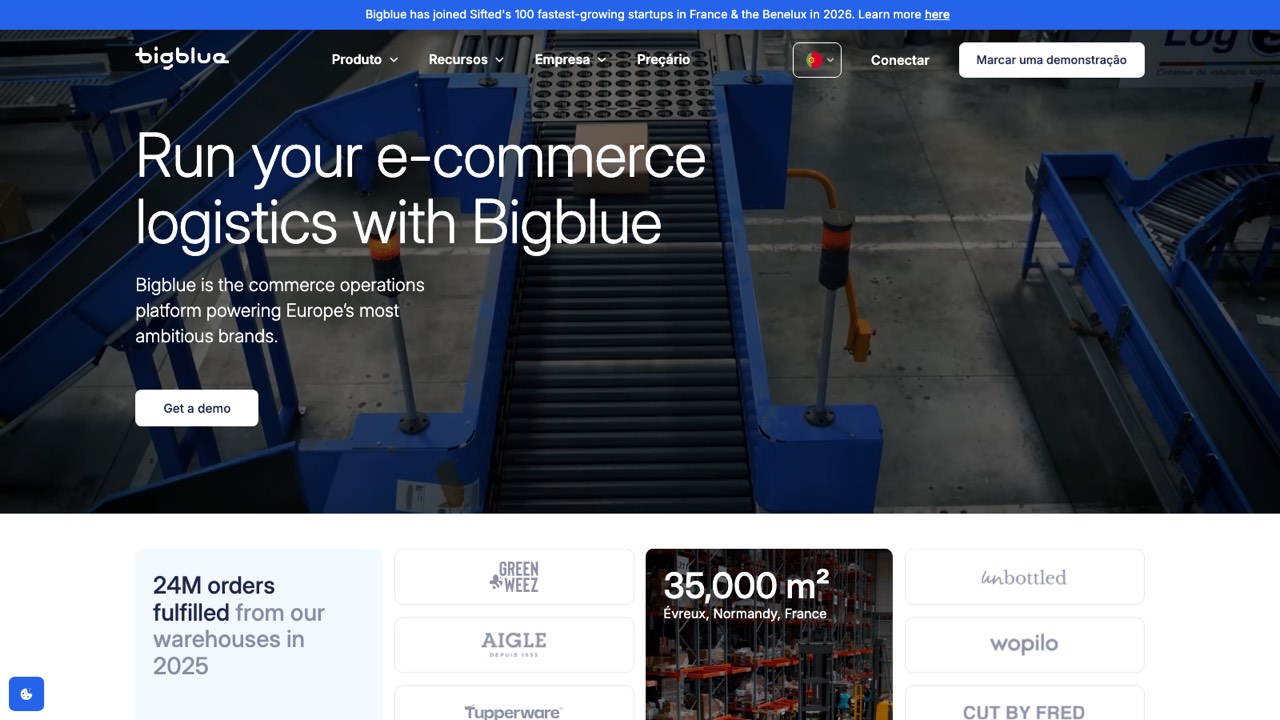
Fundação: 2018. Sede: Paris, França. 3PL europeu que faz funcionar fulfilment, envio e devoluções numa só plataforma, em 10 armazéns (6 em França, 2 em Espanha, 1 no Reino Unido, 1 na Alemanha), com devoluções orientadas para a troca primeiro integradas de raiz.
- Rede de armazéns: consolidação local das devoluções em cada mercado onde tem procura, através da rede europeia de armazéns e do stack de escalabilidade da Bigblue.
- Gestão de devoluções: Store Credit integrado e fluxos que dão prioridade à troca; na CAVAL, o cesto pago em Store Credit é 47% maior do que a compra original.
- Stack tecnológico: plataforma própria que cobre fulfilment, envio e devoluções, com integrações Shopify, WooCommerce e Prestashop.
- Resultados de clientes: a Daphine evitou 30% dos reembolsos e atingiu 100% de satisfação do cliente em três meses.
- Cobertura transfronteiriça: a ZOEVA opera uma configuração de França, Alemanha e Reino Unido sobre a rede, enviando 40.000+ encomendas por mês.
Ideal para:
- Marcas de e-commerce em crescimento (mínimo 500 encomendas por mês) que já enviam na Europa e querem usar a logística para fidelizar clientes.
- Marcas D2C e retalho ambiciosas que querem oferecer uma experiência de entrega premium (do tracking às devoluções) em B2C e B2B em mais de 190 países.
ShipBob
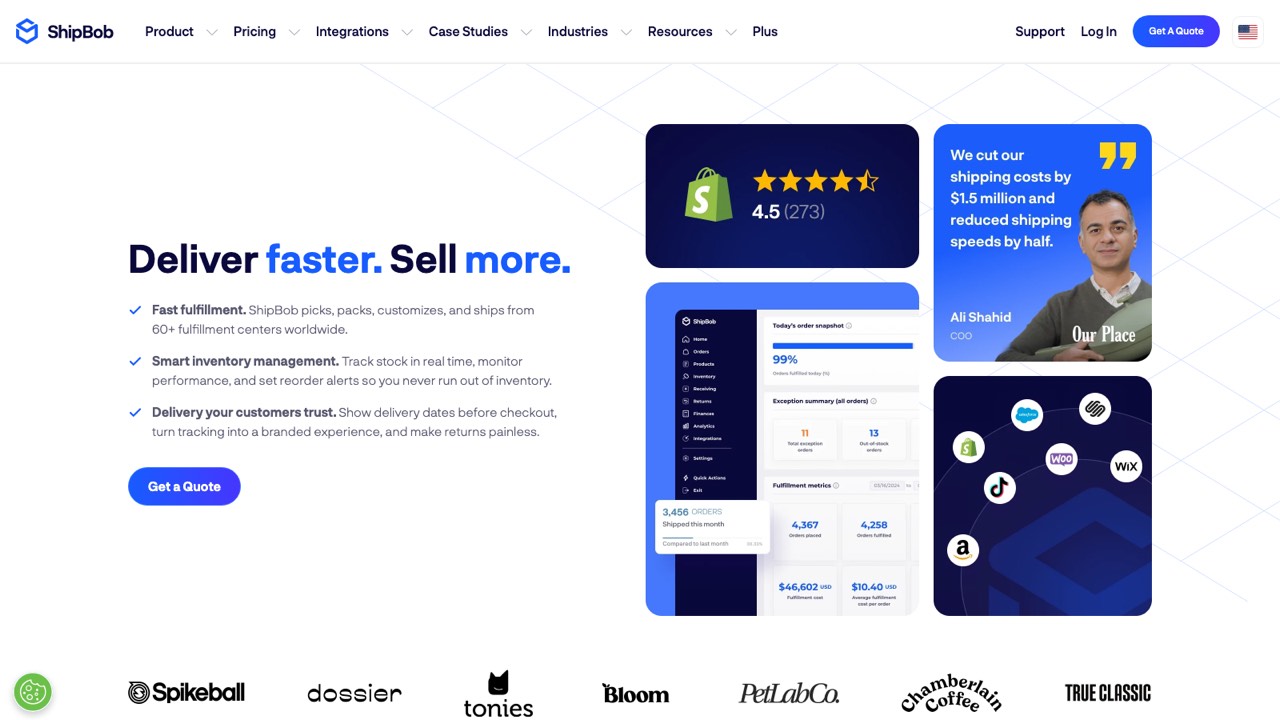
Fundação: 2014. Sede: Chicago, EUA. 3PL sediado nos EUA que opera 50+ centros de fulfilment na América do Norte, Reino Unido, UE e Austrália, com devoluções nativas do Shopify.
- Rede de armazéns: 50+ centros de fulfilment, incluindo locais no Reino Unido e na UE.
- Gestão de devoluções: portal de devoluções, inspeção e reposição em stock dentro da mesma operação.
- Stack tecnológico: WMS próprio com integrações Shopify, WooCommerce e BigCommerce.
- Transfronteiriço: stock distribuído por várias regiões, sem um armazém único por defeito.
Ideal para:
- Marcas D2C em crescimento que operam entre a Europa e a América do Norte.
- Marcas nativas do Shopify que precisam de fulfilment europeu e norte-americano a partir de um único fornecedor.
Loop Returns

Fundação: 2017. Sede: Columbus, EUA. Plataforma de devoluções software-first criada para o Shopify, usada por 4.000+ comerciantes, com lógica de política centrada na troca primeiro.
- Portal de devoluções: processo de devolução com a marca, com regras de elegibilidade.
- Lógica de troca: crédito bónus, trocas instantâneas, troca de variantes.
- Stack tecnológico: nativo do Shopify com acesso aprofundado à API; integra-se com os grandes 3PL.
- Cobertura: global onde o 3PL do comerciante opera; sem camada de armazém própria.
Ideal para:
- Marcas Shopify que já operam com um 3PL integrado e querem acrescentar por cima um portal dedicado centrado na troca.
- Comerciantes de moda e lifestyle em que a taxa de troca é o fator principal.
ReturnGo
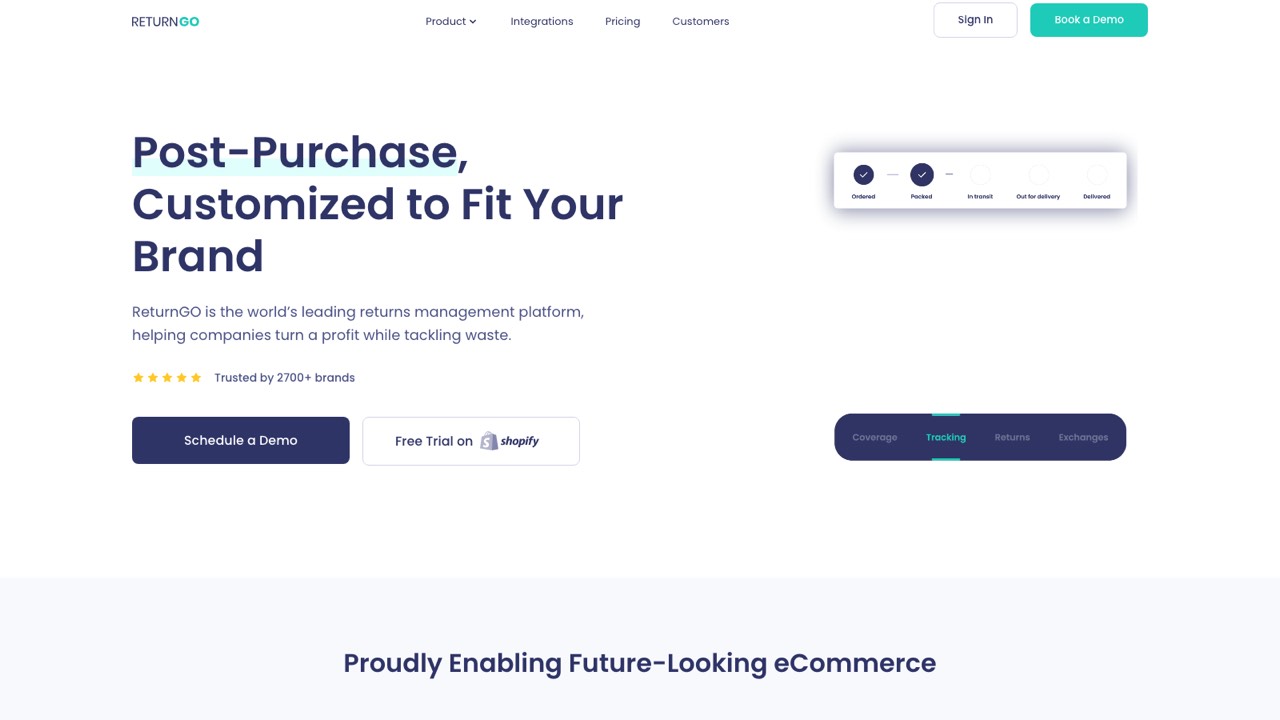
Fundação: 2020. Sede: Telavive, Israel. Software de devoluções assistido por IA para Shopify e Shopify Plus, usado por 1.500+ comerciantes, que automatiza a elegibilidade e o encaminhamento de reembolsos.
- Portal de devoluções: portal com a marca e decisões automatizadas baseadas em regras.
- Lógica de IA: encaminhamento conforme o estado, sinais de fraude, scoring de elegibilidade.
- Stack tecnológico: integração Shopify e Shopify Plus com as principais transportadoras.
- Cobertura: apenas camada de software; depende do parceiro de fulfilment do comerciante para o fluxo físico.
Ideal para:
- Marcas Shopify em fase inicial a crescimento que vendem em Portugal e no resto da Europa.
- Marcas que precisam de automatizar a sua política antes de investir num novo parceiro de fulfilment.
AfterShip Returns

Fundação: 2012. Sede: Hong Kong. Portal de devoluções multiplataforma com 1.000+ integrações de transportadoras e tracking pós-compra integrado.
- Portal de devoluções: portal com a marca, elegibilidade baseada em regras e trocas em self-service.
- Rede de transportadoras: 1.000+ integrações de transportadoras para a geração de etiquetas de devolução.
- Stack tecnológico: integrações Shopify, Magento, BigCommerce e Salesforce Commerce Cloud.
- Cobertura: apenas software; apoia-se no 3PL do comerciante para o manuseamento físico.
Ideal para:
- Comerciantes em fase inicial a crescimento que operam em várias plataformas de e-commerce.
- Marcas que querem tracking e devoluções a partir do mesmo stack de software.
ZigZag Global

Fundação: 2015. Sede: Londres, Reino Unido. Plataforma de devoluções e orquestração de transportadoras que liga os comerciantes a 170+ países e 200+ transportadoras.
- Orquestração de transportadoras: encaminhamento dinâmico por encomenda, rota e SLA.
- Rede de devoluções: opções de entrega e recolha em 130+ países.
- Stack tecnológico: integrações Shopify, Salesforce Commerce Cloud e Magento.
- Cobertura: apenas orquestração; apoia-se em 3PL locais para a reposição em stock e o recondicionamento.
Ideal para:
- Retalhistas em fase de escala que operam em várias regiões.
- Marcas que precisam de um único contrato que abranja muitas redes de devolução locais.
James and James
Fundação: 2010. Sede: Northampton, Reino Unido. 3PL sediado no Reino Unido, WMS próprio ControlPort e hubs de fulfilment no Reino Unido e nos EUA.
- Rede de armazéns: centros de fulfilment no Reino Unido e nos EUA.
- Gestão de devoluções: inspeção e reposição em stock geridas no mesmo WMS da expedição.
- Stack tecnológico: WMS próprio ControlPort com integrações Shopify, Magento e WooCommerce.
- Categorias de especialização: bens de consumo, saúde e beleza, alimentação e bebidas.
Ideal para:
- Marcas D2C em crescimento que vendem no Reino Unido.
- Marcas portuguesas que precisam de fulfilment britânico e norte-americano a partir de um único parceiro.
Bleckmann

Fundação: 1862. Sede: Bélgica. 3PL europeu focado em moda e lifestyle, que gera cerca de 1,5 mil milhões de € de receita, com locais em vários países.
- Rede de armazéns: Reino Unido, Bélgica, Países Baixos e Alemanha.
- Gestão de devoluções: inspeção, controlo de qualidade, recondicionamento e reembalagem pronta para revenda.
- Categorias de especialização: moda, lifestyle, D2C premium.
- Stack tecnológico: integrações Shopify, SAP e Salesforce Commerce Cloud.
Ideal para:
- Marcas de moda e lifestyle em fase de escala que operam por toda a Europa.
- Marcas que precisam de serviços de valor acrescentado como recondicionamento e gestão de B-stock.
Que fornecedor encaixa na sua fase
- Marca Shopify em fase inicial, Portugal ou UE: ReturnGo ou AfterShip Returns.
- Marca portuguesa em crescimento que vende no Reino Unido: Bigblue ou James and James.
- Marca da UE multipaís em crescimento: Bigblue ou ShipBob.
- Marca de moda em fase de escala por toda a Europa: Bigblue ou Bleckmann.
- Retalhista global que só precisa de orquestração de transportadoras: ZigZag Global ou Loop Returns combinado com um 3PL local.
Para alargar a comparação, cruze esta lista com a nossa seleção das melhores empresas de fulfilment na Europa.
5 passos para escolher um parceiro de logística inversa
- Identifique o principal problema: perda de clientes que voltariam a comprar, tempo parado em armazém ou trabalho repetido no apoio ao cliente.
- Mapeie os volumes de devolução por país e quantos pontos de recolha os seus clientes já usam.
- Enumere as categorias de serviço necessárias: inspeção, recondicionamento, R2/WEEE, gestão de recolhas.
- Compare os candidatos em três indicadores: tempo parado em armazém, rácio reembolso/troca e custo total por devolução.
- Ponha o fornecedor escolhido à prova num caso real durante 30 dias antes de migrar tudo.
Transforme a logística numa alavanca de retenção
Gere a sua logística D2C e B2B com a Bigblue, a plataforma de operações de comércio que impulsiona as marcas mais ambiciosas da Europa.
Descobrir a BigbluePerguntas frequentes
Quem são os principais fornecedores de logística inversa em 2026?
Para marcas de e-commerce mid-market de Portugal e da Europa em 2026, os principais fornecedores de logística inversa são a Bigblue, a ShipBob, a Loop Returns, a ReturnGo, a AfterShip Returns, a ZigZag Global, a James and James e a Bleckmann. A divisão reparte-se entre 3PL integrados (Bigblue, ShipBob, James and James, Bleckmann) e portais software-first (Loop Returns, ReturnGo, AfterShip Returns, ZigZag Global).
Quais são os 7 R da logística inversa?
Returns (devoluções), Recalls (recolhas), Repairs (reparações), Repackaging (reembalagem), Refurbishment (recondicionamento), Recycling (reciclagem) e Remanufacturing (refabricação). A Bigblue encaminha os primeiros seis dentro da sua operação; a refabricação cabe normalmente a parceiros industriais específicos de cada categoria.
Qual é a diferença entre gestão de devoluções e logística inversa?
A gestão de devoluções é o portal que o cliente vê e a lógica de decisão de reembolso ou troca. A logística inversa é o fluxo físico completo de regresso à marca: transportadora, consolidação, inspeção, reposição em stock, recondicionamento e destruição. A Bigblue cobre ambas numa única operação.
A logística inversa aplica-se apenas às devoluções de e-commerce?
Não. Cobre também as devoluções por garantia e as recolhas técnicas, as embalagens de transporte reutilizáveis que voltam à origem e a recolha de produtos em fim de vida. As marcas de e-commerce mid-market costumam tocar apenas no fluxo de devolução do cliente; os 3PL industriais tratam do resto.
As transportadoras globais e os operadores postais nacionais são fornecedores de logística inversa?
Não. As transportadoras movem a encomenda; os 3PL gerem a inspeção, a reposição em stock e a revenda; os portais software-first gerem a decisão do cliente. As três camadas são complementares mas diferentes, e uma solução séria combina-as em vez de as juntar num único fornecedor.
Como é tarifada a logística inversa na Europa?
Conte com cinco rubricas na fatura: receção da encomenda (2 a 5 €), inspeção de cada artigo (3 a 8 €), armazenamento do que ainda não pode ser revendido (0,50 a 2 € por palete e por mês), mão de obra de reparação faturada à hora e envio de saída dos artigos que se revendem. A maioria dos fornecedores agrupa tudo isto num preço único por devolução para que a área financeira possa comparar em pé de igualdade.
E quanto à fraude e ao rigor da inspeção nas devoluções?
9% de todas as devoluções são fraudulentas (NRF, 2025). Os fornecedores sólidos aplicam critérios de inspeção ao nível do SKU, captura de fotografias para devoluções contestadas e um filtro de reposição em stock que retém as unidades suspeitas. Controlos fracos voltam a pôr à venda stock não vendável e alargam a janela de reposição em stock.
Como absorve uma marca um pico de devoluções sem partir a margem?
As devoluções atingem o pico em dezembro e janeiro, com uma subida menor depois da Black Friday e da Cyber Monday (BFCM). Há dois fatores que contam: a capacidade de inspeção por dia e o SLA de reposição em stock durante o pico. Os fornecedores que flexibilizam a mão de obra e operam consolidação multipaís absorvem a subida sem pôr encomendas em fila de espera.
O que acontece aos artigos não vendáveis?
As unidades não vendáveis seguem quatro destinos: recondicionamento para revenda como B-stock, canais secundários como outlet ou liquidação por grosso, reciclagem certificada R2 ou WEEE para eletrónica em fim de vida e destruição em conformidade para categorias regulamentadas.
Que importância têm as trocas e o Store Credit?
Central. Em Inglaterra, um mercado de referência maduro, os retalhistas online registam uma taxa de devolução de 17,5%, um rácio de reembolso de 78,1% e apenas 5,8% de adesão à troca (eCommerceNews UK, 2025). Quando a troca ou o Store Credit são fáceis de escolher, mais receita fica na marca.
Pode um 3PL melhorar as devoluções sem acrescentar outro portal?
Sim, quando o 3PL faz funcionar as devoluções na mesma plataforma que usa para fulfilment e envio. A Bigblue fá-lo em 10 armazéns europeus (6 França, 2 Espanha, 1 Reino Unido, 1 Alemanha); a Daphine evitou 30% dos reembolsos e poupou 59 minutos por semana no processamento de devoluções graças a isso.
.webp)


