Ecommerce & Retail Inspirations
Allbirds built one of the most talked-about direct-to-consumer (DTC) brands of the past decade, reaching nearly $300 million in revenue by 2022 on the strength of sustainable materials and word-of-mouth buzz. The years since brought failed product extensions, mounting losses, dozens of US store closures, and a full pivot to e-commerce by early 2026.
That arc makes Allbirds' marketing playbook worth studying. The DTC strategies that fueled the rise still hold lessons for e-commerce operators. Below, a breakdown of the playbook and what the 2026 pivot means for the brand.
What makes Allbirds different? A focus on comfort and sustainability
Before we get into marketing tactics, let's understand Allbirds' core proposition.
Allbirds, the footwear brand, was launched in 2016 by Tim Brown, a former New Zealand soccer player, and Joey Zwillinger, an engineer and renewables expert. They saw a gap in the market for comfortable, stylish shoes made with sustainable materials.
Allbirds shoes are built with natural materials like merino wool and tree fibre, prioritising comfort and ethical production over flashy logos and trends. This focus on comfort and sustainability resonates with a growing number of consumers who are looking for more than just a pretty shoe.
Allbirds transcended the tech world, becoming a hit in Silicon Valley. Even Google co-founder Larry Page was spotted sporting a pair.
Allbirds' net revenue peaked at nearly $300 million in 2022, but the company has not been profitable. In an effort to attract younger customers, Allbirds ventured beyond their core wool shoe line with edgier sneakers. These attempts were unsuccessful, contributing to financial losses.
This led them to miss sales expectations. Since 2023, Allbirds has taken decisive action to restructure and refocus on its core product, relaunching the iconic Wool Runner 2 while cutting costs through store closures and production consolidation. Full-year 2025 revenue guidance came in at $165 to $180 million as the company transitioned international markets to a distributor model (Allbirds Q2 2025 Earnings). By January 2026, Allbirds announced it would close all remaining full-price US stores by the end of February, keeping only two outlet locations and two brand-run stores in London (Allbirds, January 2026). The company is now fully focused on e-commerce, wholesale partnerships, and international distributorships.
Allbirds is a certified B corp company since 2016.
Allbirds developed the M0.0NSHOT, the world's first net zero carbon sneaker, with a 0.0 kg CO₂e footprint (vs. the industry standard of 14 kg). After years of R&D, the shoe went on sale in February 2025 (Allbirds, February 2025). It uses regenerative wool, sugarcane-based materials, and bioplastic eyelets. They're open-sourcing their methods to inspire the shoe industry.

Through its 2021 Flight Plan, Allbirds set a goal to cut its per-product carbon footprint in half by the end of 2025, then reduce it to near zero by 2030. By 2023, the company had brought its average per-product footprint down to 5.54 kg CO₂e, a 22% year-over-year reduction (Allbirds Sustainability Report, 2024).
2. Building a loyal community: The power of Allbirds' marketing strategy
Word-of-mouth marketing now goes far beyond telling friends about a great product. Allbirds used the power of social media and online communities to build buzz around the brand.
Here's how they did it:
2.1 Social media engagement
Allbirds understood the power of platforms like Instagram and Facebook early on. They didn't just use these platforms for advertising; they used them to engage with their audience, share the story behind their products, and build a community around their brand.
User-generated content (UGC) played a big role here. The #WeAreAllbirds hashtag encouraged customers to share their experiences, fostering a sense of belonging.

2.2 Influencer marketing
Partnering with social media influencers and content creators who align with Allbirds' values helped them reach new audiences and build trust. Authentic recommendations from trusted voices are a powerful marketing tool.
2.3 Affiliate marketing
By rewarding individuals or companies for referring new customers, Allbirds incentivised their existing fanbase to spread the word and extend their reach organically.

2.4 PR
They also understood the value of traditional public relations. They worked with PR agencies to get their story featured in major publications like The New York Times, Forbes, and Vogue. This not only helped to increase brand awareness but also added a level of credibility to their products.
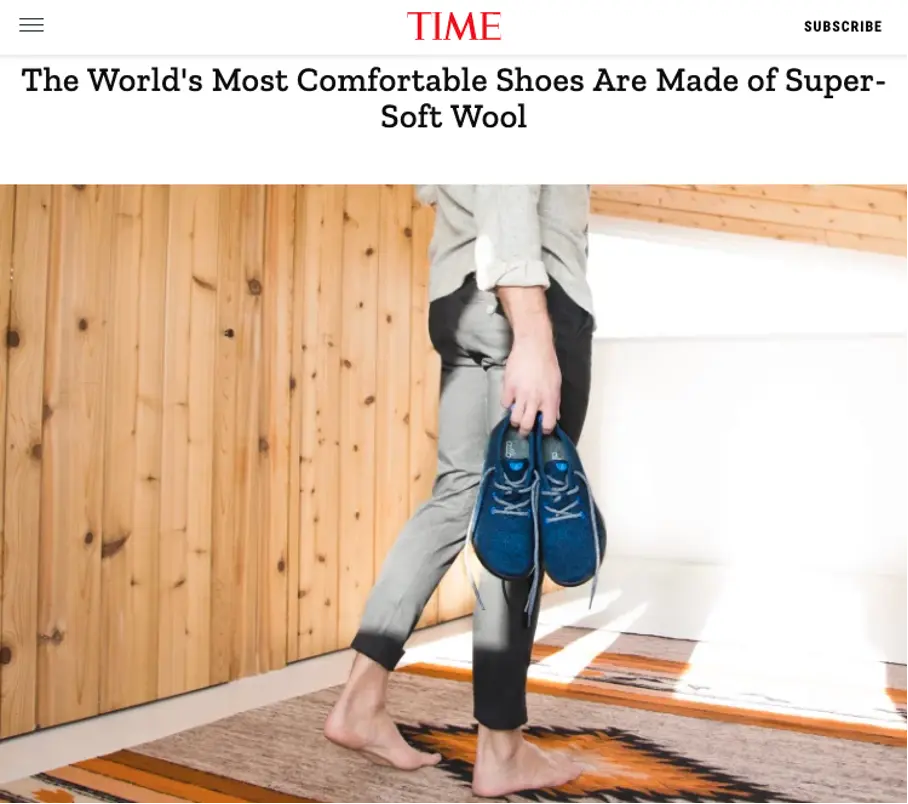
Perhaps the most notable PR move was when Time magazine named Allbirds' wool runners as the most comfortable shoe in the world. This endorsement gave Allbirds a significant boost in visibility and reputation, further solidifying their position in the market.
2.5 Advertising
Allbirds grabs attention with visually stunning ads that consistently highlight comfort and sustainability. They use playful language to target specific audiences and use simple messaging focusing on their main selling point: the most comfortable shoes.
They even partnered with celebrities like Lindsay Lohan to promote their newest colour launch!
Allbirds runs a mix of whitelisting and branded ads across Meta platforms, with active campaigns visible on the Meta Ads Library.
3. Standing out from the crowd: Allbirds' consistent brand experience
Consistency is key to building a strong brand. From product design to marketing efforts, Allbirds maintains a clear message and aesthetic that aligns with its core values.
This consistency extends to:
- Content creation: Their social media posts, blog articles, and email newsletters all focus on the brand's core selling points: comfort and sustainability. This consistent messaging reinforces their brand identity and makes their value proposition clear.
- Website & product pages: Allbirds' website is user-friendly and showcases its products effectively with high-quality visuals and clear information. The focus is on the product, not on gimmicks or flashy sales tactics.
@weareallbirds We went to the farm. We ate some pluots. We dyed some shoes. We DID NOT go in the pigpen. And we learned that if we just listen to Mother Nature, she'll give us everything we need. #marshawnlynch #schooledwithmarshawn #allbirds #farmvisit #fieldtrip ♬ original sound - Allbirds
3.1 Pricing for sustainability: A premium without compromise
Allbirds' pricing strategy is another key differentiator. They don't offer frequent sales or discounts, positioning themselves as a premium brand that prioritises quality materials and sustainable practices. This reflects their commitment to ethical production.

They famously increased their prices on Black Friday by $1 and donated the extra proceeds to a climate change initiative.
This approach might seem risky, but it resonates with their target audience who value quality and ethical production over the lowest possible price.
3.2 More than just shoes: Building a brand personality
Allbirds understands that a strong brand personality is essential for connecting with customers. They've managed to create a brand that's not only sustainable and comfortable but also approachable and fun. This is evident in everything they do, from product design to marketing materials.
Their brand personality can be described as playful and down-to-earth. They don't take themselves too seriously and often use humour and wit in their marketing. This lighthearted tone creates a more enjoyable shopping experience and makes the brand more relatable.
4. From startup to success: Key takeaways from Allbirds' DTC journey
Allbirds' story offers valuable lessons for any business looking to make its mark, especially in a crowded market. Here are some key takeaways:
- Focus on a clear and differentiated value proposition. What makes your brand unique? Cater to a specific need or value set that resonates with your target audience.
- Embrace innovation and sustainability. Consumers are increasingly looking for brands that align with their values.
- Build a community around your brand. Social media and online communities are powerful tools for engagement and word-of-mouth marketing.
- Maintain a consistent brand experience. Every touchpoint, from product design to marketing materials, should reflect your brand identity.
- Be strategic about pricing. Don't be afraid to premiumize your products if they reflect your quality and values.
- Develop a strong brand personality. Create a brand that connects with your target audience on an emotional level.
Allbirds' success lies in their ability to resonate with a customer base seeking sustainability and transparency.
Allbirds, following the footsteps of fellow digitally native brand Warby Parker, built its business on a DTC model, bypassing the traditional retail supply chain to sell directly to customers online and in retail stores.
Their missteps since 2022 highlight the challenge of balancing core product focus with market expansion.
The years since have partly answered the question of whether Allbirds can turn things around. Full-year 2025 revenue was guided at $165 to $180 million, down from the $300 million peak, as the company transitioned to a distributor model in international markets and closed US retail stores (Allbirds Q2 2025 Earnings). By early 2026, all full-price US stores were shut, with the brand now betting on e-commerce and wholesale to rebuild profitability.
Can Allbirds keep its existing customer base engaged while rebuilding through digital and wholesale channels? With co-founder Joey Zwillinger now focused on a separate venture (Biologica), the brand faces a defining chapter: staying true to its comfort-first, sustainable identity while finding a path back to growth.
.webp)